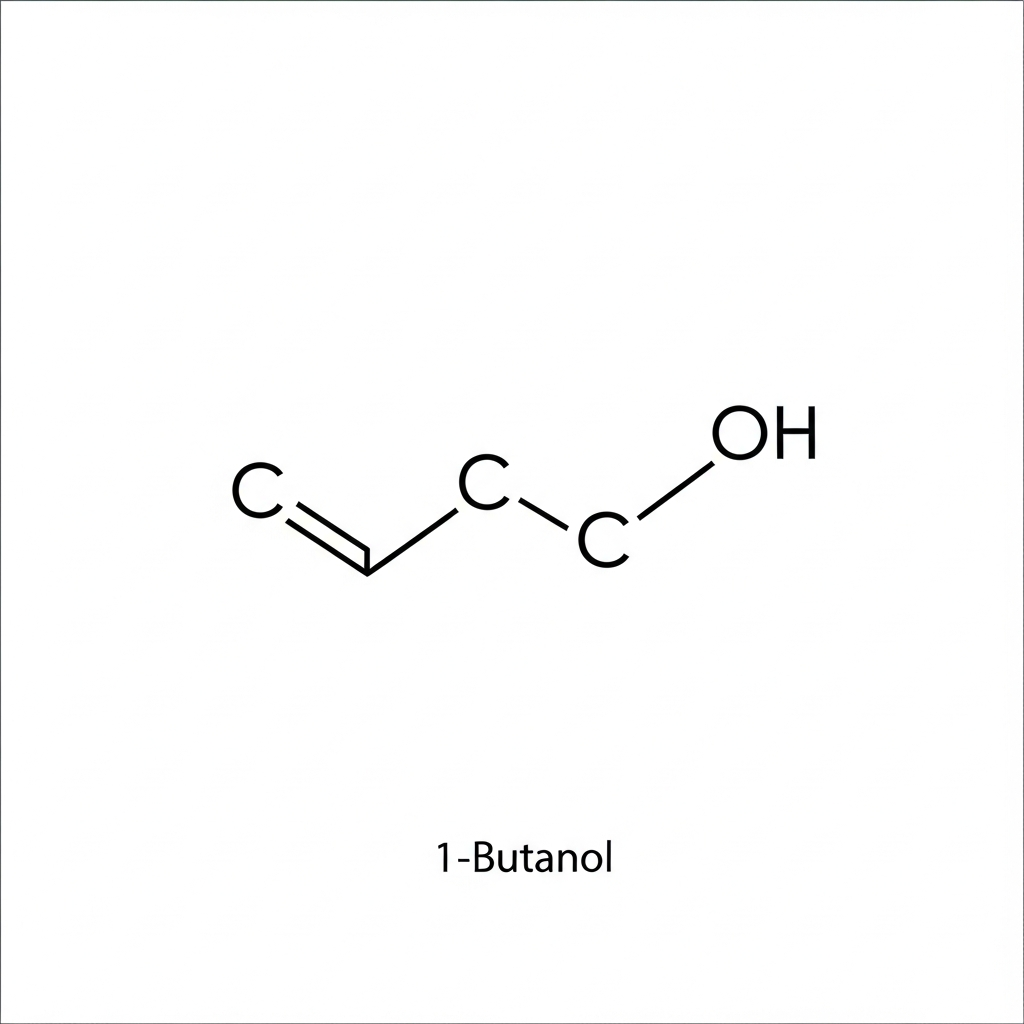
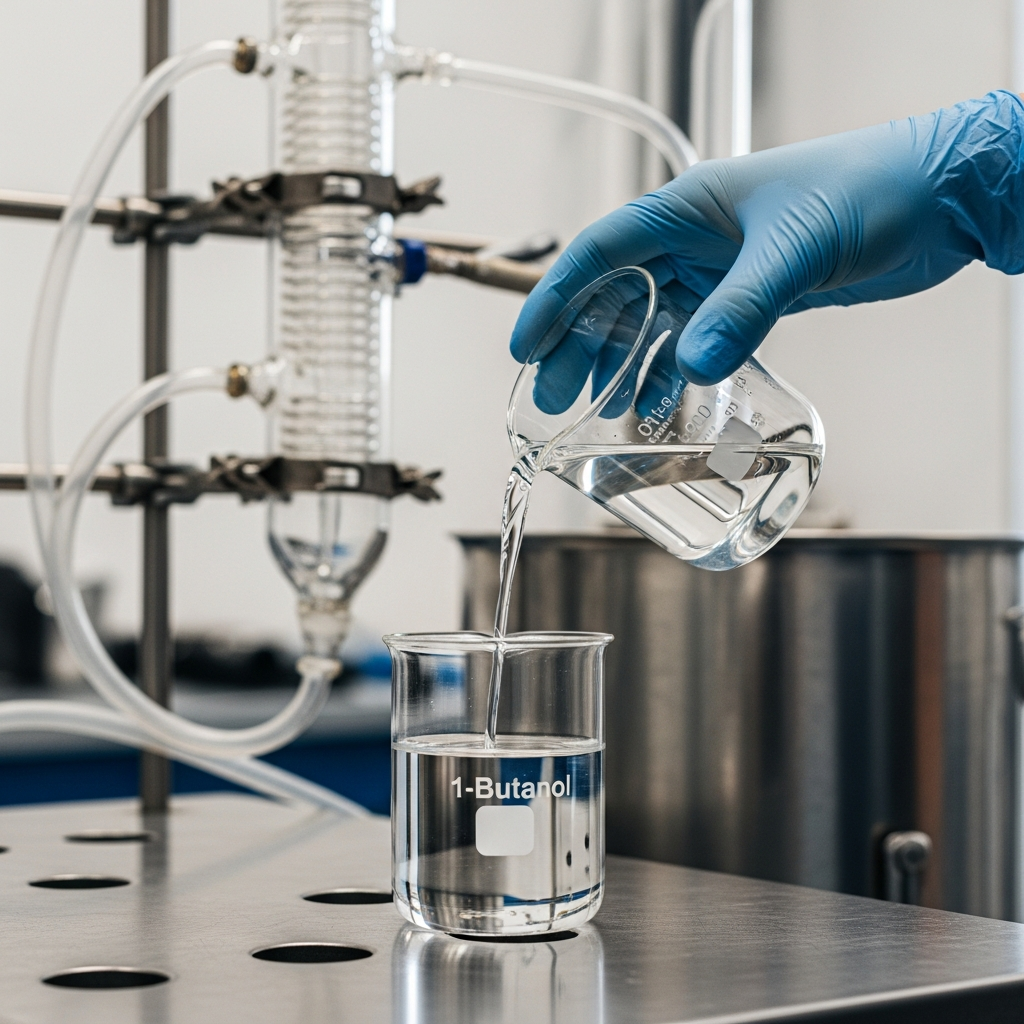
1-Butanol (CAS: 71-36-3), also known as n-butanol or propylcarbinol, is a four-carbon primary alcohol with the molecular formula $C_4H_9OH$. It is a clear, colorless liquid characterized by a distinct, pungent, banana-like odor. While it occurs naturally as a byproduct of the fermentation of sugars, industrial production is predominantly achieved through the “oxo process,” involving the hydroformylation of propylene. 1-Butanol serves as a vital bridge in the chemical industry, acting as both a high-performance solvent and a versatile chemical intermediate. Unlike shorter-chain Alcohol, it exhibits lower volatility and higher energy density, making it valuable in specialized industrial formulations. Its chemical profile allows it to blend with various organic solvents while maintaining limited solubility in water. Safety management is critical, as 1-Butanol is flammable and its vapors can cause respiratory and ocular irritation. It remains a cornerstone in the production of polymers, plasticizers, and coatings globally.
* Excellent solvent for a wide range of resins and coatings.
* Key chemical intermediate for producing plasticizers and esters.
* Essential building block in pharmaceutical and organic synthesis.
* Contributes to the formulation of high-performance hydraulic fluids.
* Valuable extractant in various chemical processes.
* High purity (min. 99.5%) ensures consistent product performance.
* Low moisture content makes it suitable for sensitive applications.
* Versatile compound applied across industries including textiles and specialty chemicals.
* Purity (Wt%): 99.5 Min
* Water (Wt%): 0.1 Max
* Acidity (as acetic acid) (Wt%): 0.005 Max
* Color (APHA): 10 Max
* Density @ 20°C (g/ml): 0.809 – 0.811
* Distillation Range (°C): 116.5 – 118.5
* Non Volatile Matter (Wt%): 0.005 Max
* Aldehydes (as Butyraldehyde) (ppm): 100 Max
* Iron (ppm): 0.1 Max
* Sulphur (ppm): 5 Max
* Serves as an effective solvent for paints, lacquers, varnishes, resins, and gums in the coatings industry.
* Acts as a crucial chemical intermediate for the production of plasticizers like phthalates and adipates.
* Utilized in the synthesis of various esters, including butyl acetate, for diverse industrial applications.
* An essential component in the formulation of hydraulic fluids and brake fluids.
* Functions as an extractant for fats, oils, organic acids, vitamins, and pharmaceuticals.
* Used in the manufacture of pharmaceuticals and other specialty chemicals as a key raw material.


Have a question or need a quote? Our team is here to help with product details, pricing, and global delivery options.
Your email address will not be published. Required fields are marked *