Bio - Based / Green Solvents, High-Purity Solvents

1-Octanol (C8 Alcohol)

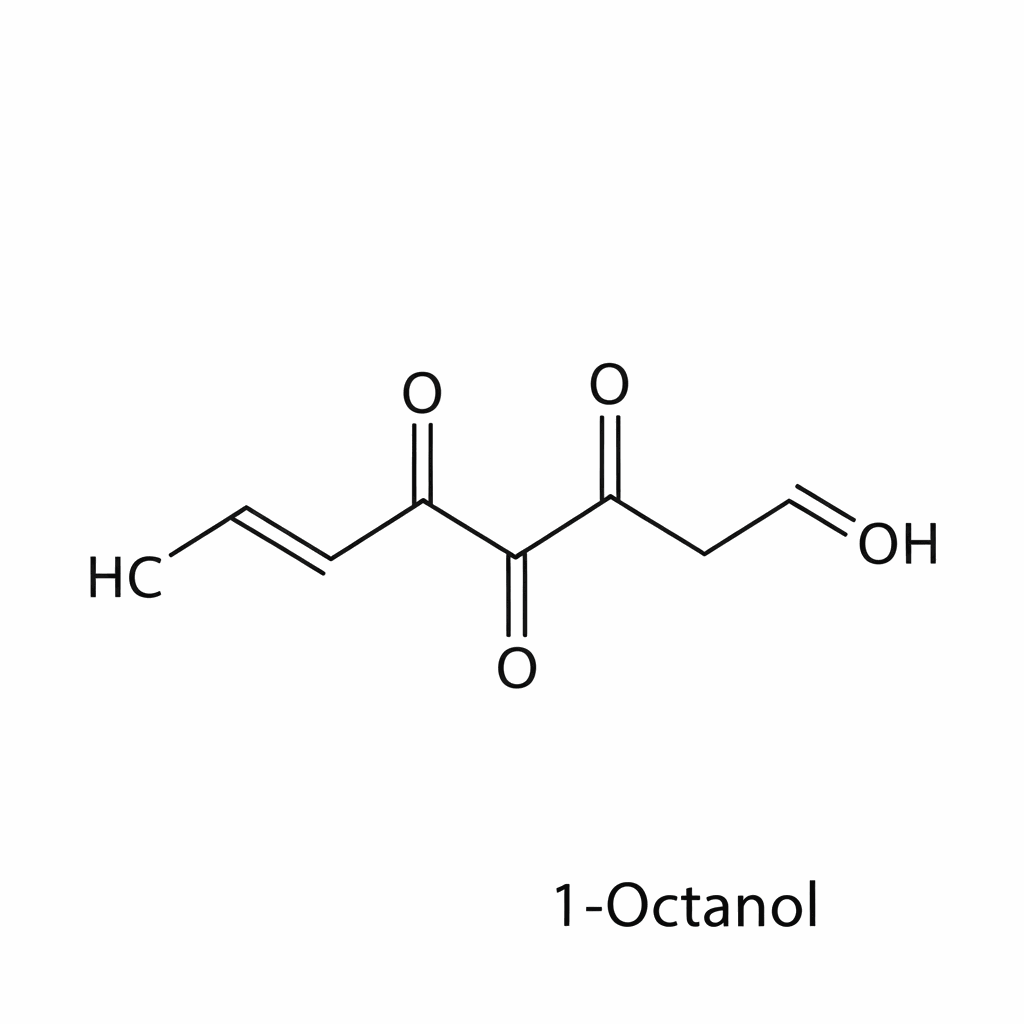
1-Octanol, also known as caprylic alcohol, is a straight-chain fatty alcohol characterized by an eight-carbon backbone. This colorless, slightly viscous liquid exhibits a pungent, aromatic odor and occurs naturally in various essential oils, including those from orange and grapefruit. Chemically, it serves as a primary alcohol with the formula C8H18O, featuring a terminal hydroxyl group. Its amphiphilic nature, possessing both a hydrophobic alkyl chain and a hydrophilic polar head, makes it a cornerstone in biochemistry for determining the partition coefficient (Log P). This value is crucial for assessing how pharmaceutical compounds distribute between water and lipids, predicting bioavailability and toxicity. Industrially, 1-octanol acts as a vital intermediate in the synthesis of esters and surfactants. Due to its unique solubility profile, it is sparingly soluble in water but miscible with many organic solvents. Its synthesis typically involves the oligomerization of ethylene using the Ziegler process or the hydroformylation of terminal alkenes.
Attributes

Key Features and Benefits

  • High-purity primary linear alcohol providing consistent reactivity for chemical derivatization and industrial synthesis.
  • Demonstrates exceptional stability under standard storage conditions, resisting atmospheric oxidation and degradation over time.
  • Features a unique balance of lipophilic and hydrophilic properties, making it the industry standard for octanol-water partition tests.
  • Exhibits a characteristic citrus-like aroma profile, enabling its use in high-end fragrance formulations and flavor masking applications.
  • Acts as an efficient defoaming agent in industrial processes due to its ability to lower surface tension in aqueous systems.
Specifications

Technical Highlights

  • Molecular formula C8H18O with a molar mass of approximately 130.23 g/mol and a CAS Registry Number of 111-87-5.
  • Specific gravity ranges from 0.824 to 0.830 at 20 degrees Celsius, ensuring density consistency for formulation and volumetric calculations.
  • Boils at approximately 195 degrees Celsius and has a melting point of -16 degrees Celsius under standard atmospheric pressure.
  • Flash point is rated at 81 degrees Celsius, classifying it as a combustible liquid requiring appropriate safety and handling protocols.
  • Refractive index typically measures between 1.428 and 1.431 at 20 degrees Celsius, serving as a key purity verification metric.

Download Technical Data Sheet (TDS)

Practical industry uses

Applications

  • Utilized extensively in pharmaceutical research to simulate biological membranes during drug permeability and lipophilicity evaluation studies.
  • Serves as a critical precursor for producing esters like dioctyl phthalate, which are used as plasticizers in PVC manufacturing.
  • Employed as a solvent and fragrance enhancer in the cosmetics industry for lotions, creams, and perfumes.
  • Functions as a chemical intermediate in the production of surfactants and alkyl amines used in detergents and wetting agents.
  • Acts as a performance additive in lubricants and fuels to improve cold-flow properties and reduce surface friction components.
Key Sectors

Target Industries

Discover more

Related products

Key Sectors

We’re Here to Support Your Chemical Sourcing Needs

Have a question or need a quote? Our team is here to help with product details, pricing, and global delivery options.

Send a message to us

Your email address will not be published. Required fields are marked *