High-Purity Solvents, Water Treatments

1,2,3-Benzotriazole (BTA)

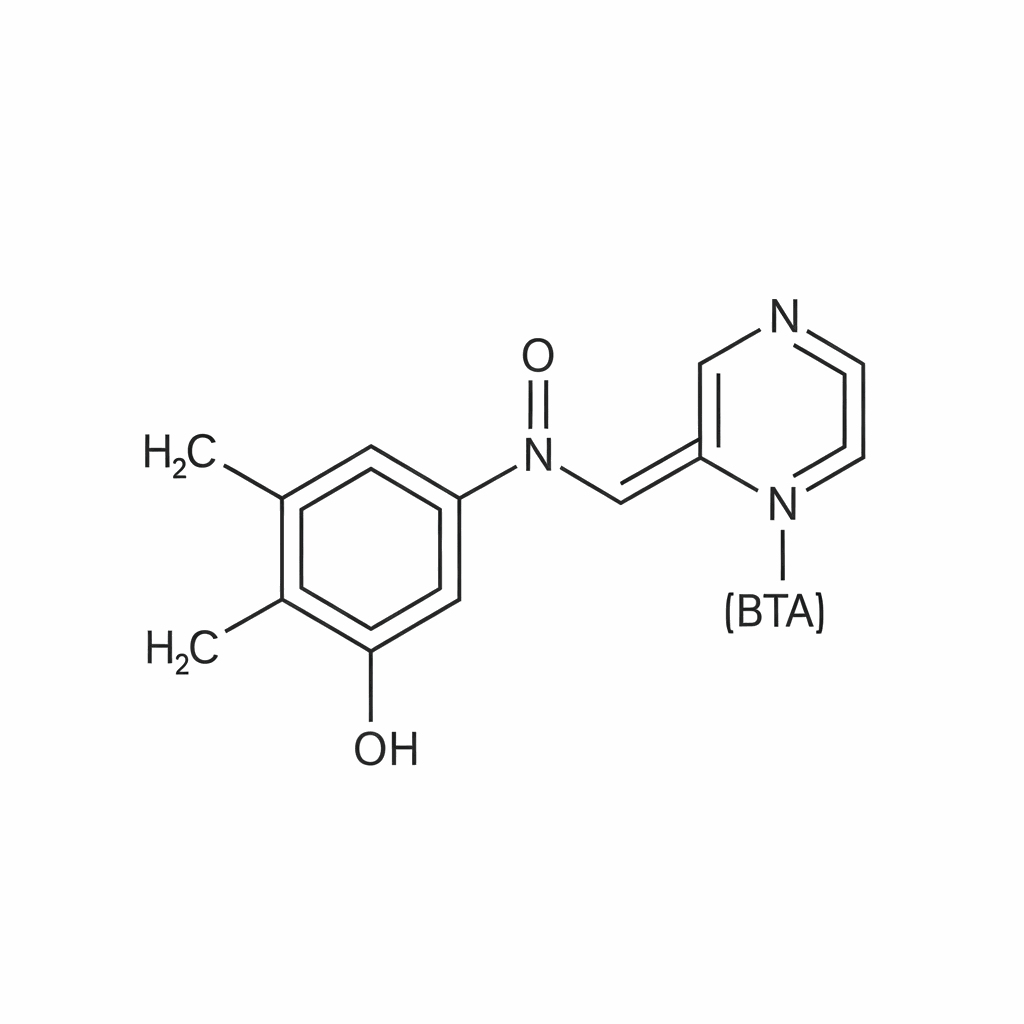
1,2,3-Benzotriazole (BTA), identified by CAS number 95-14-7, is a prominent heterocyclic compound consisting of a benzene ring fused to a 1,2,3-triazole ring. It is recognized globally as one of the most effective corrosion inhibitors, particularly for copper and its alloys, such as brass and bronze. BTA functions through the formation of a stable, insoluble, and chemically resistant chemisorbed layer on the metal surface. This molecular film acts as a barrier against oxidative degradation and atmospheric corrosion. Physically, it appears as white to off-white crystalline granules or powder. While BTA exhibits moderate solubility in water, it is highly soluble in organic solvents like ethanol, benzene, and ethylene glycol. Due to its efficacy at low concentrations and its thermal stability, BTA is a critical additive in cooling water systems, lubricants, and electronics manufacturing. Its chemical versatility also allows it to serve as a precursor in organic synthesis and a stabilizer in various industrial applications.

Attributes

Key Features and Benefits

  • Exceptional Passivation: Creates a robust, molecular-level protective film on copper surfaces, effectively halting both anodic and cathodic corrosion reactions.
  • Thermal Stability: Exhibits high resistance to thermal decomposition, allowing it to remain effective in high-temperature industrial environments.
  • Multi-System Compatibility: Soluble in both aqueous and organic mediums, providing versatility for diverse formulations ranging from antifreeze to lubricants.
  • Tarnish Prevention: Highly effective at preventing the discoloration and oxidation of finished metal parts during storage and transit.
  • Synergistic Performance: Works efficiently in combination with other scale and corrosion inhibitors to provide comprehensive protection in multi-metal systems.
Specifications

Technical Highlights

  • Molecular Formula: C6H5N3 (Molecular Weight: 119.12 g/mol).
  • Physical Properties: A crystalline solid with a melting point range of 97°C to 100°C and a boiling point of 204°C (at 15 mmHg).
  • Complexation Mechanism: Operates by forming a covalent-coordination bond with metal ions (specifically Cu+ and Cu2+), creating a (Cu-BTA)n polymer film.
  • Solubility Profile: Solubility in water is approximately 20 g/L at 20°C, increasing significantly in polar organic solvents.
  • pH Stability: Remains active across a broad pH range, though optimal performance in water treatment is often observed in neutral to slightly alkaline conditions.

Download Technical Data Sheet (TDS)

Practical industry uses

Applications

  • Industrial Water Treatment: Used in cooling towers, heat exchangers, and boiler systems to prevent the corrosion of copper-based heat exchange surfaces.
  • Automotive Fluids: A standard additive in engine coolants and antifreeze formulations to protect radiators and heating cores.
  • Electronics and Semiconductors: Applied in the microelectronics industry for the passivation of copper interconnects and as a cleaning agent in Chemical Mechanical Polishing (CMP).
  • Metalworking Fluids: Integrated into cutting oils and grinding fluids to prevent rust on machinery and preserve the integrity of the workpiece.
  • Lubricants and Greases: Added to hydraulic oils and gear lubricants to inhibit metal-catalyzed oxidation and surface wear.
  • Safety Note: 1,2,3-Benzotriazole is classified as harmful if swallowed and is an eye irritant. It is toxic to aquatic life with long-lasting effects. Proper Personal Protective Equipment (PPE) should be worn during handling, and disposal must comply with local environmental regulations.
Key Sectors

Target Industries

Discover more

Related products

Key Sectors

We’re Here to Support Your Chemical Sourcing Needs

Have a question or need a quote? Our team is here to help with product details, pricing, and global delivery options.

Send a message to us

Your email address will not be published. Required fields are marked *