High-Purity Solvents, Polyurethane (PU) and Resin

Adipic Acid (AA)

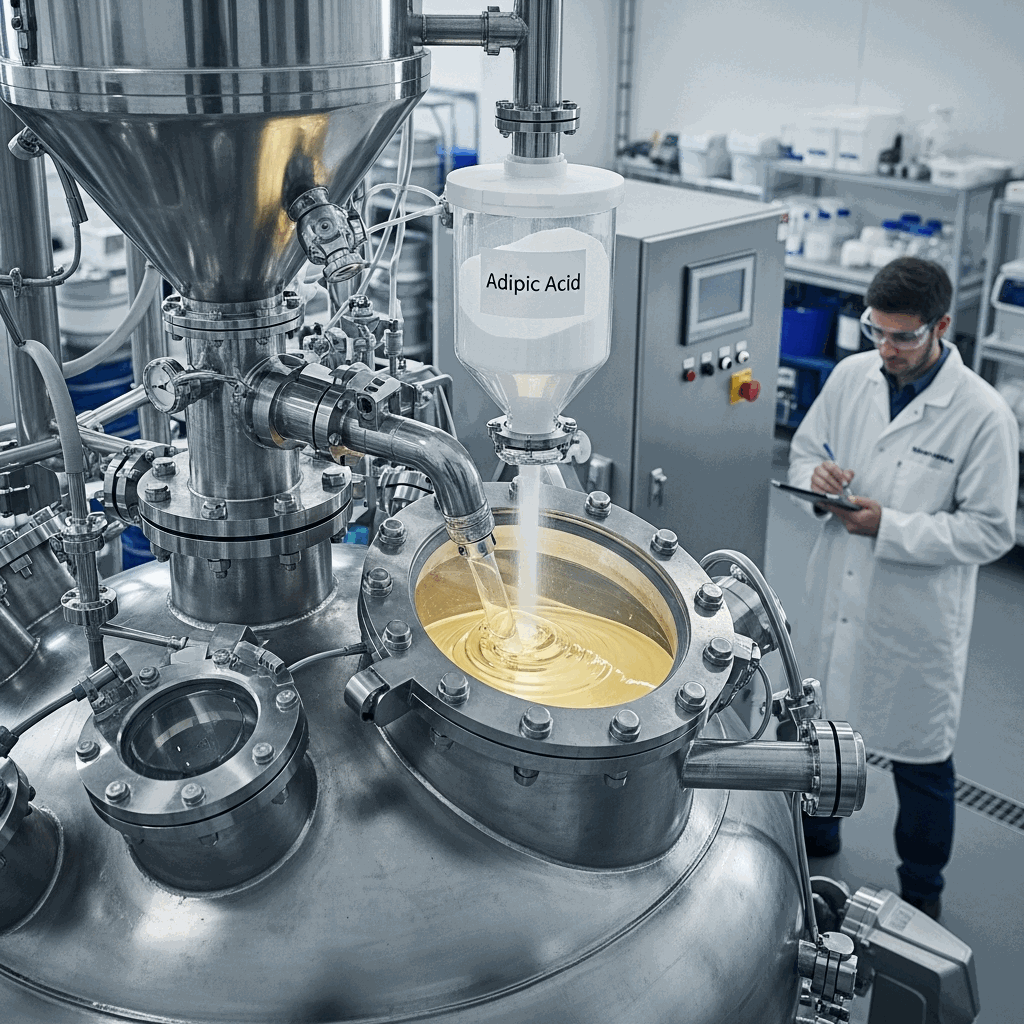
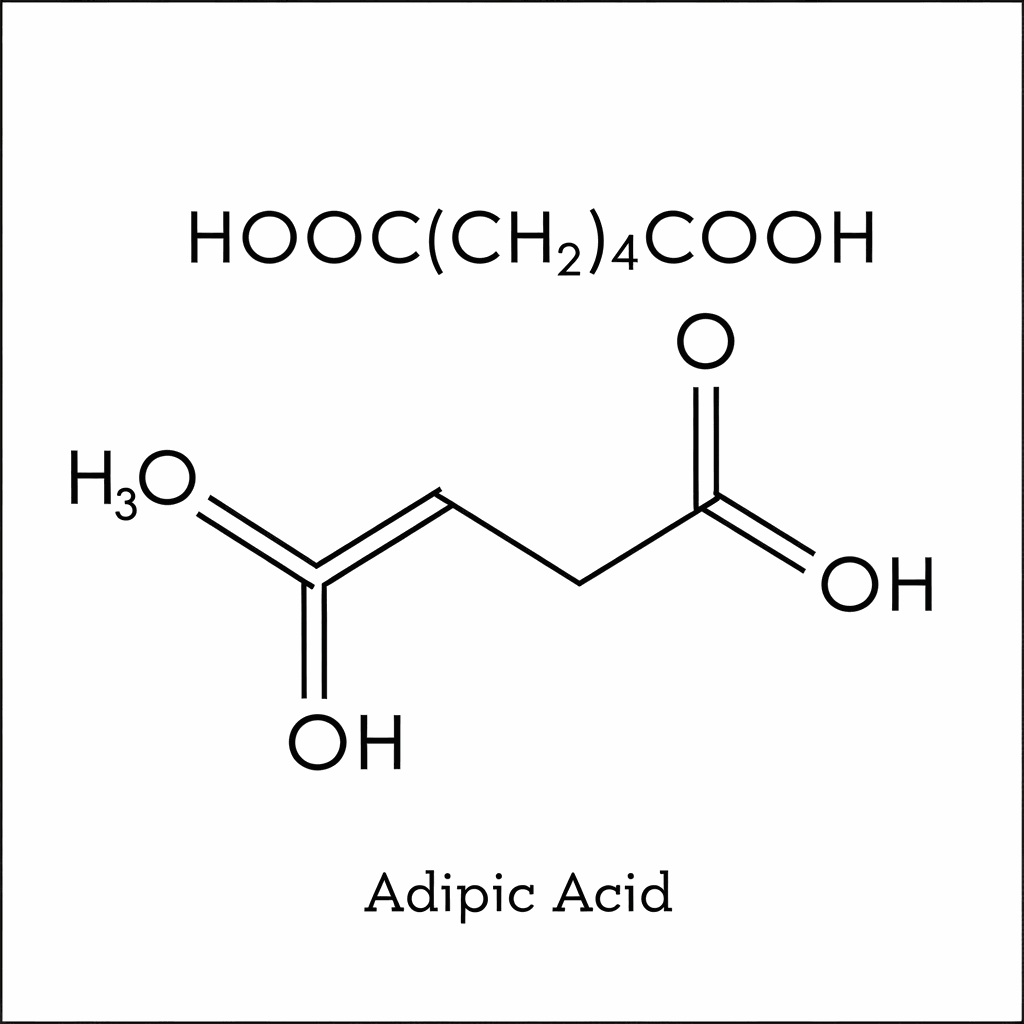
Adipic acid, systematically known as hexanedioic acid, is a critically important industrial dicarboxylic acid. Characterized as a white, crystalline, and odorless powder, it serves as a foundational building block in the global polymer industry. While trace amounts occur naturally in beet juice and certain fats, the vast majority of commercial adipic acid is produced synthetically via the nitric acid oxidation of “KA oil” (a mixture of cyclohexanol and cyclohexanone).

Its primary significance lies in its role as a monomer for the synthesis of Nylon 6,6, where it undergoes a polycondensation reaction with hexamethylenediamine. Beyond textiles, it is indispensable in the production of polyurethanes, plasticizers, and high-performance lubricants. Adipic acid is valued for its high purity and bifunctionality, allowing for the creation of robust, heat-resistant, and chemically stable materials. As a professional-grade chemical intermediate, it must be handled with standard industrial safety protocols to mitigate its mild irritant properties to the skin and respiratory tract.

Attributes

Key Features and Benefits

  • High Purity Standards: Commercial grades typically exceed 99.8% purity, ensuring consistent reaction kinetics and high-quality end-polymer chains.
  • Bifunctional Reactivity: Contains two carboxylic acid groups at the terminal positions, facilitating efficient linear polymerization and cross-linking.
  • Controlled Acidity: Acts as an effective buffering agent and acidulant in specialized chemical and food formulations.
  • Excellent Stability: Demonstrates high thermal and oxidative stability under standard storage and processing conditions.
  • Enhanced Material Durability: Imparts superior mechanical strength, abrasion resistance, and flexibility to resulting polyamides and elastomers.
  • Low Volatility: Its low vapor pressure at room temperature minimizes inhalation risks and atmospheric emissions during processing.
Specifications

Technical Highlights

  • Molecular Weight: 146.14 g/mol.
  • Melting Point: 151°C to 154°C (304°F to 309°F).
  • Boiling Point: 337.5°C at 1013 hPa (decomposes at higher temperatures).
  • Solubility: Slightly soluble in water ($23text{ g/L}$ at 25°C); highly soluble in ethanol, methanol, and acetone.
  • Acidity ($pK_a$): $pK_{a1} = 4.41$; $pK_{a2} = 5.41$, allowing for precise pH control in aqueous solutions.
  • Density: 1.36 g/cm³ at 25°C.
  • Flash Point: ~196°C (closed cup).
  • Grade Availability: Offered in Technical/Industrial grade and Food grade (complying with E355 specifications).

Download Technical Data Sheet (TDS)

Practical industry uses

Applications

  • Polyamide Synthesis: The precursor for Nylon 6,6, used in automotive parts, tire cords, carpets, and high-performance apparel.
  • Polyurethanes: Utilized in the production of polyester polyols for flexible and rigid foams, shoe soles, and thermoplastic elastomers (TPU).
  • Plasticizers: Used to manufacture adipate esters, such as Dioctyl Adipate (DOA), providing low-temperature flexibility to PVC resins.
  • Chemical Intermediates: Essential in the synthesis of lubricants, hydraulic fluids, and corrosion inhibitors.
  • Food Industry: Applied as a leavening agent, acidulant, and flavoring enhancer in powdered desserts and fruit drinks.
  • Coatings and Resins: Acts as a cross-linking agent in waterborne resins and alkyd coatings to improve weatherability and adhesion.
Key Sectors

Target Industries

Discover more

Related products

Key Sectors

We’re Here to Support Your Chemical Sourcing Needs

Have a question or need a quote? Our team is here to help with product details, pricing, and global delivery options.

Send a message to us

Your email address will not be published. Required fields are marked *