High-Purity Solvents, Water Treatments

Aluminum Sulfate

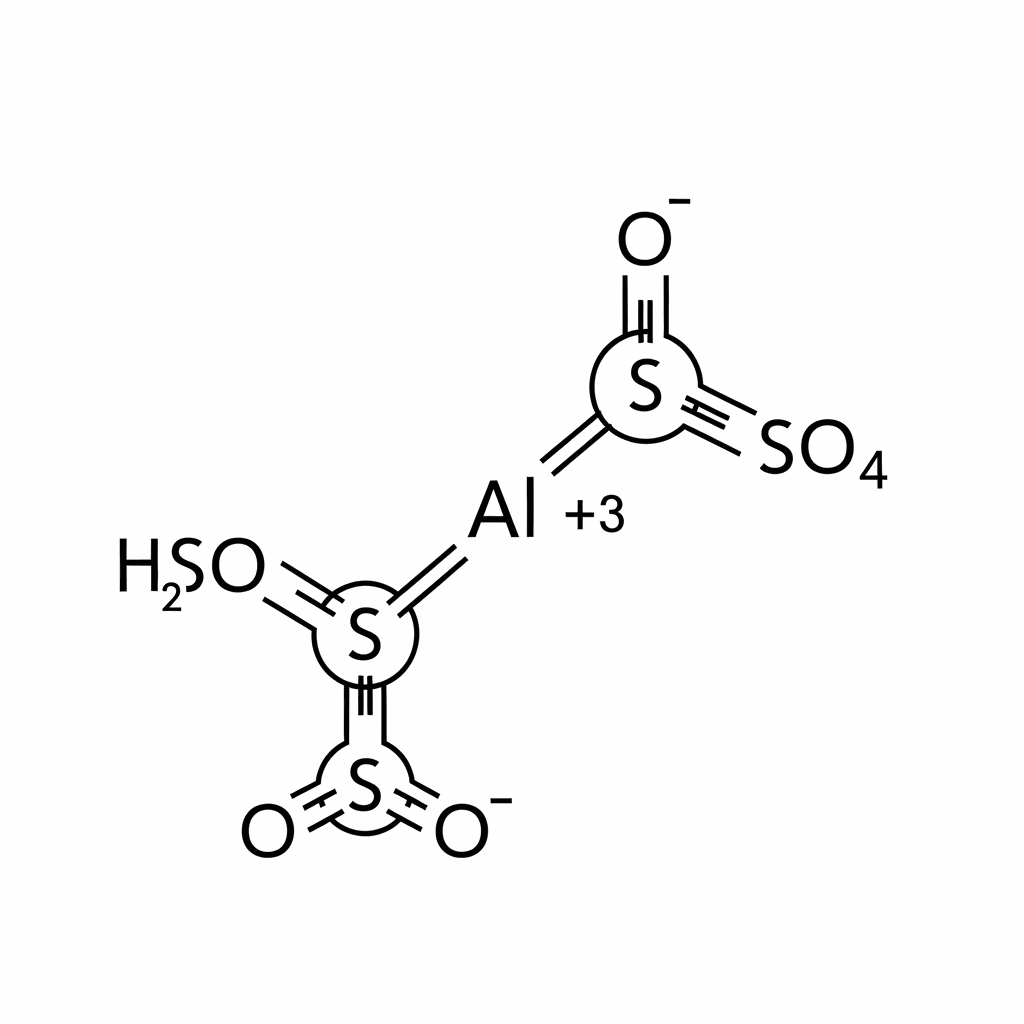
Aluminum sulfate, commercially known as “alum” or “papermaker’s alum,” is a critical inorganic chemical compound with the formula Al2(SO4)3. It occurs naturally in minerals like alunogenite but is industrially synthesized by reacting aluminum hydroxide with sulfuric acid. The compound exists in several hydration states, with the octadecahydrate (Al2(SO4)3 · 18H2O) being the most common form in commerce. Appearing as a white crystalline solid or a clear liquid solution, aluminum sulfate is highly soluble in water but insoluble in ethanol.

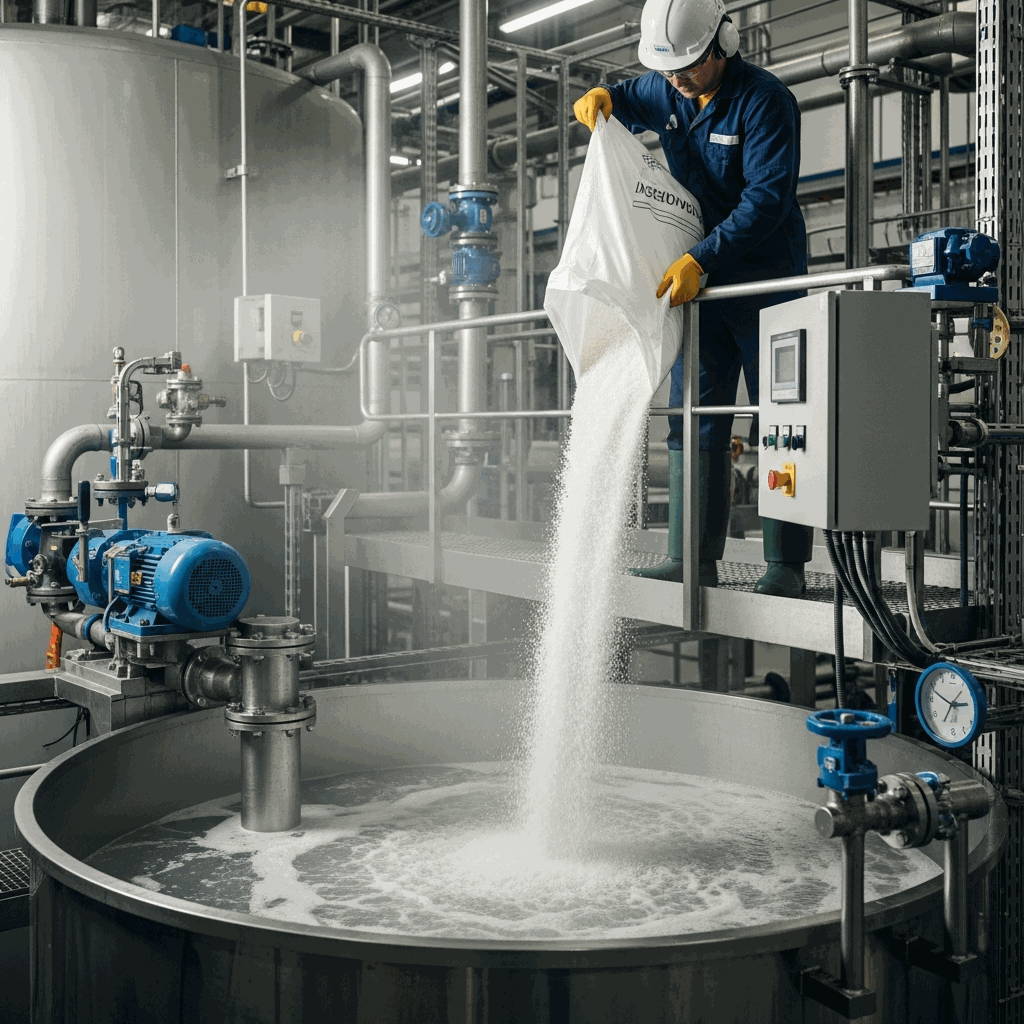
Its primary industrial significance lies in its role as a powerful coagulant. When dissolved in water, it forms gelatinous aluminum hydroxide precipitates that trap impurities, making it indispensable for municipal water purification and wastewater treatment. Beyond environmental engineering, it serves as a cornerstone in the paper industry for sizing and in textiles as a mordant. While generally stable, its acidic nature requires specialized storage to prevent the corrosion of metallic equipment.
Attributes

Key Features and Benefits

  • Superior Coagulation: Effectively neutralizes the negative charge of suspended particles, promoting rapid flocculation and sedimentation in water.
  • Economic Efficiency: Remains one of the most cost-effective chemical solutions for large-scale industrial water clarification.
  • High Solubility: Dissolves rapidly in water, allowing for easy dosing and integration into automated liquid feed systems.
  • Multi-Functional: Serves dual roles as a pH adjuster and a chemical reactant across various sectors, from construction to cosmetics.
  • Grade Variety: Available in “iron-free” grades for high-purity applications and “commercial” grades for general industrial utility.
  • Phosphorus Removal: Highly effective at precipitating phosphates from wastewater, aiding in the prevention of eutrophication.
Specifications

Technical Highlights

  • Molar Mass: 342.15 g/mol (anhydrous); 666.42 g/mol (octadecahydrate).
  • Physical State: White lustrous crystals, granules, or powder; also available as an aqueous solution.
  • pH Profile: Highly acidic; a 1% aqueous solution typically maintains a pH between 2.0 and 4.0.
  • Solubility: Approximately 36.4 g/100 mL in water at 20°C, increasing significantly with temperature.
  • Thermal Stability: Decomposes upon heating to approximately 770°C, releasing toxic vapors of sulfur oxides (SOx).
  • Density: 2.71 g/cm³ (anhydrous); 1.62 g/cm³ (octadecahydrate).
  • Reactivity: Corrosive to carbon steel and certain alloys; requires plastic, fiberglass, or 316 stainless steel storage.

Download Technical Data Sheet (TDS)

Practical industry uses

Applications

  • Water Purification: The primary agent used for clarifying potable water and removing turbidity in municipal treatment plants.
  • Pulp and Paper: Utilized as a sizing agent to facilitate the binding of fibers and improve paper water-resistance.
  • Textile Manufacturing: Acts as a mordant to fix dyes to fabric fibers, ensuring colorfastness and vibrancy.
  • Construction: Used as a concrete accelerator and waterproofing agent to speed up setting times in specialized mortars.
  • Agriculture/Gardening: Applied to soil to lower pH levels, specifically to change the color of hydrangeas or support acid-loving plants.
  • Wastewater Management: Facilitates the removal of heavy metals and organic matter through chemical precipitation.
Key Sectors

Target Industries

Discover more

Related products

Key Sectors

We’re Here to Support Your Chemical Sourcing Needs

Have a question or need a quote? Our team is here to help with product details, pricing, and global delivery options.

Send a message to us

Your email address will not be published. Required fields are marked *