High-Purity Solvents, Personal Care

Distearyl Amine

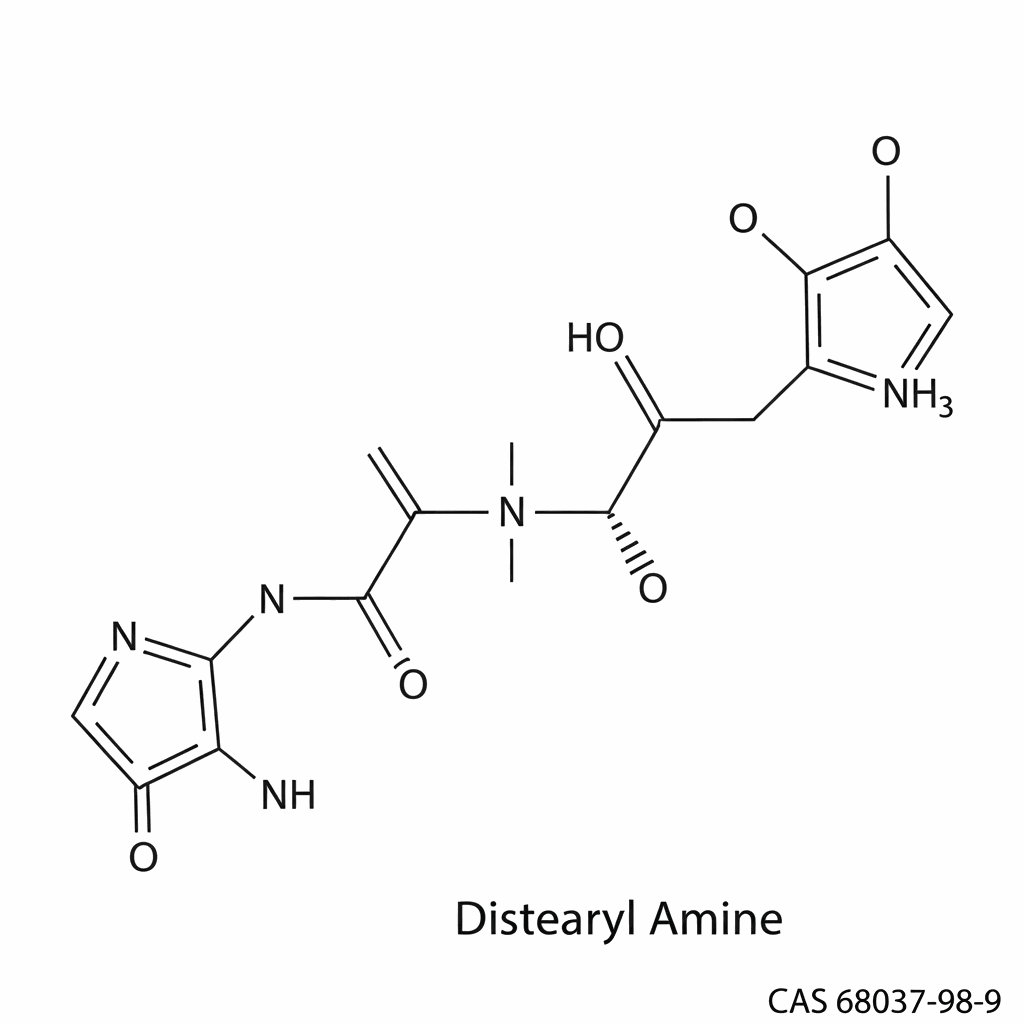
Distearyl Amine, chemically identified under CAS No. 68037-98-9, is a high-purity secondary fatty amine derived primarily from the hydrogenation of tallow-based nitriles. It is characterized by its long-chain alkyl groups, predominantly consisting of saturated C16 (palmitic) and C18 (stearic) carbon chains. At room temperature, this compound typically appears as a white to off-white waxy solid or flake. As a secondary amine, it possesses a reactive nitrogen center flanked by two hydrophobic tails, providing it with a unique balance of chemical reactivity and intense lipophilicity. Distearyl Amine serves as a critical chemical intermediate in the synthesis of quaternary ammonium compounds, amine oxides, and betaines. Its primary value in industrial chemistry lies in its ability to impart hydrophobicity, lubrication, and surface substantivity to various formulations. It is widely recognized for its stability and is a foundational building block in the production of surfactants used across the textile, personal care, and oilfield industries.

Attributes

Key Features and Benefits

  • High Substantivity: Exhibits a strong affinity for negatively charged surfaces, providing long-lasting conditioning and protection.
  • Extreme Hydrophobicity: The dual-chain alkyl structure offers superior water-repelling properties compared to primary amines.
  • Thermal Stability: Maintains chemical integrity and performance under high-temperature processing conditions.
  • Versatile Reactivity: Acts as an efficient precursor for the synthesis of cationic surfactants and organophilic additives.
  • Lubricity: Provides excellent internal and external lubrication in polymer and metalworking applications.
  • Low Volatility: Its high molecular weight ensures low vapor pressure, making it safer and more stable for industrial use.
Specifications

Technical Highlights

  • Chemical Structure: Di(hydrogenated tallow) alkyl amine; primarily (C18H37)2NH.
  • Amine Value: Typically ranges from 105 to 118 mg KOH/g, indicating high secondary amine purity.
  • Physical State: Waxy solid with a melting point generally between 60°C and 70°C.
  • Secondary Amine Content: High-grade versions usually exceed 95% secondary amine concentration.
  • Solubility: Insoluble in water; highly soluble in warm organic solvents such as isopropanol, chloroform, and various hydrocarbons.
  • Iodine Value: Very low (typically <3), reflecting the saturated nature of the alkyl chains which ensures oxidative stability.

Download Technical Data Sheet (TDS)

Practical industry uses

Applications

  • Fabric Softeners: Used as a key intermediate in manufacturing quaternary ammonium salts that provide softness and antistatic properties to textiles.
  • Organoclay Production: Employed to modify bentonite and hectorite clays, making them organophilic for use in oil-based drilling fluids and paints.
  • Personal Care: Utilized in the synthesis of hair conditioning agents and emulsifiers for skin creams and lotions.
  • Corrosion Inhibition: Acts as a film-forming inhibitor in petroleum refining and water treatment systems.
  • Polymer Processing: Functions as a mold release agent and internal lubricant in the production of polyolefins and engineering plastics.
  • Metalworking: Incorporated into grease formulations and lubricants to enhance boundary lubrication and surface adhesion.
Key Sectors

Target Industries

Discover more

Related products

Key Sectors

We’re Here to Support Your Chemical Sourcing Needs

Have a question or need a quote? Our team is here to help with product details, pricing, and global delivery options.

Send a message to us

Your email address will not be published. Required fields are marked *