High-Purity Solvents, Personal Care

EDTA (Acid Form)

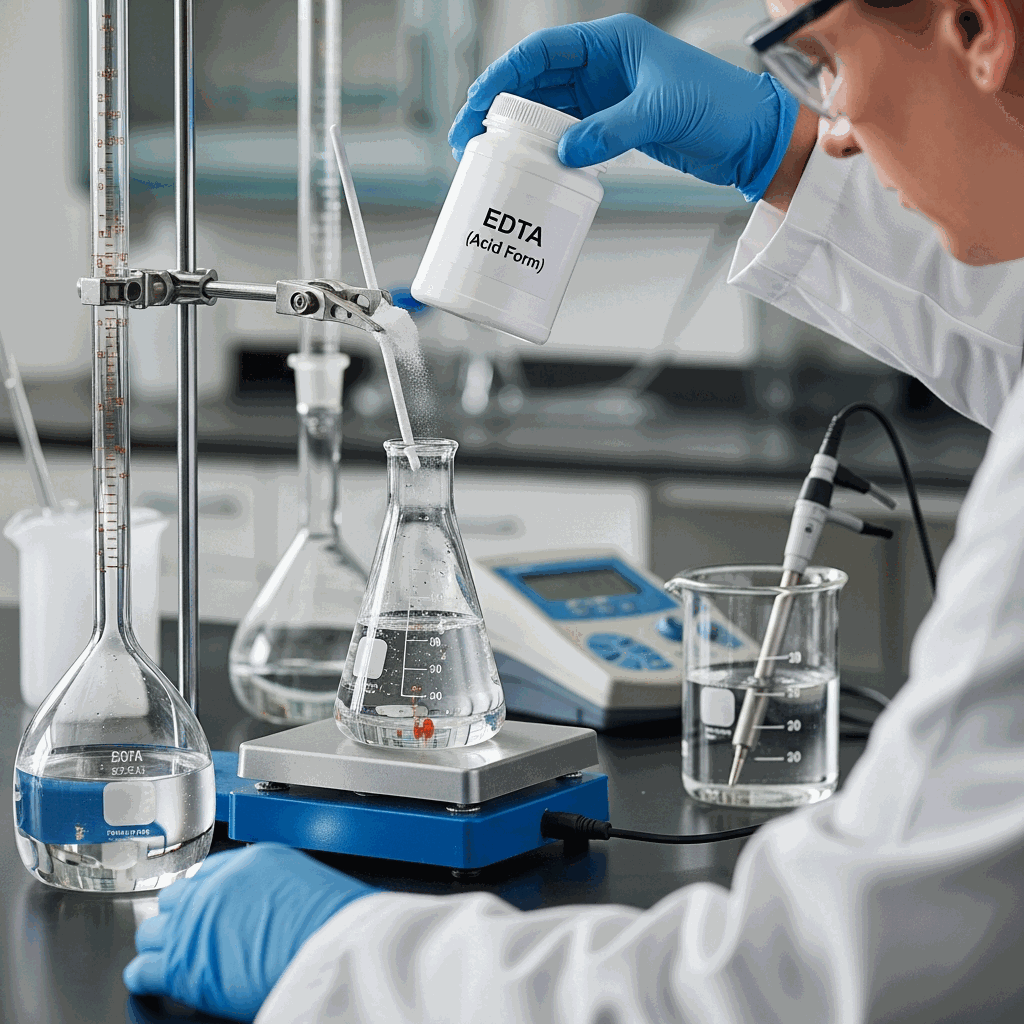
Ethylenediaminetetraacetic acid, commonly known as EDTA (Acid Form, CAS: 60-00-4), is a fundamental aminopolycarboxylic acid and one of the most versatile hexadentate chelating agents in modern chemistry. It appears as a white, odorless, crystalline powder. The primary chemical utility of EDTA lies in its unique ability to “sequester” or bind to polyvalent metal ions—such as calcium ($Ca^{2+}$), magnesium ($Mg^{2+}$), and iron ($Fe^{3+}$)—forming stable, water-soluble complex rings. This process effectively prevents these metal ions from participating in undesirable chemical reactions, such as oxidation catalysis or the formation of insoluble precipitates (scale). While the pure acid form (CAS 60-00-4) has limited solubility in water compared to its sodium salts (such as Disodium EDTA, CAS 6381-92-6), it is preferred in applications requiring high purity or precise pH adjustments. It serves as a critical stabilizer and decontaminant across industrial, pharmaceutical, and analytical sectors.

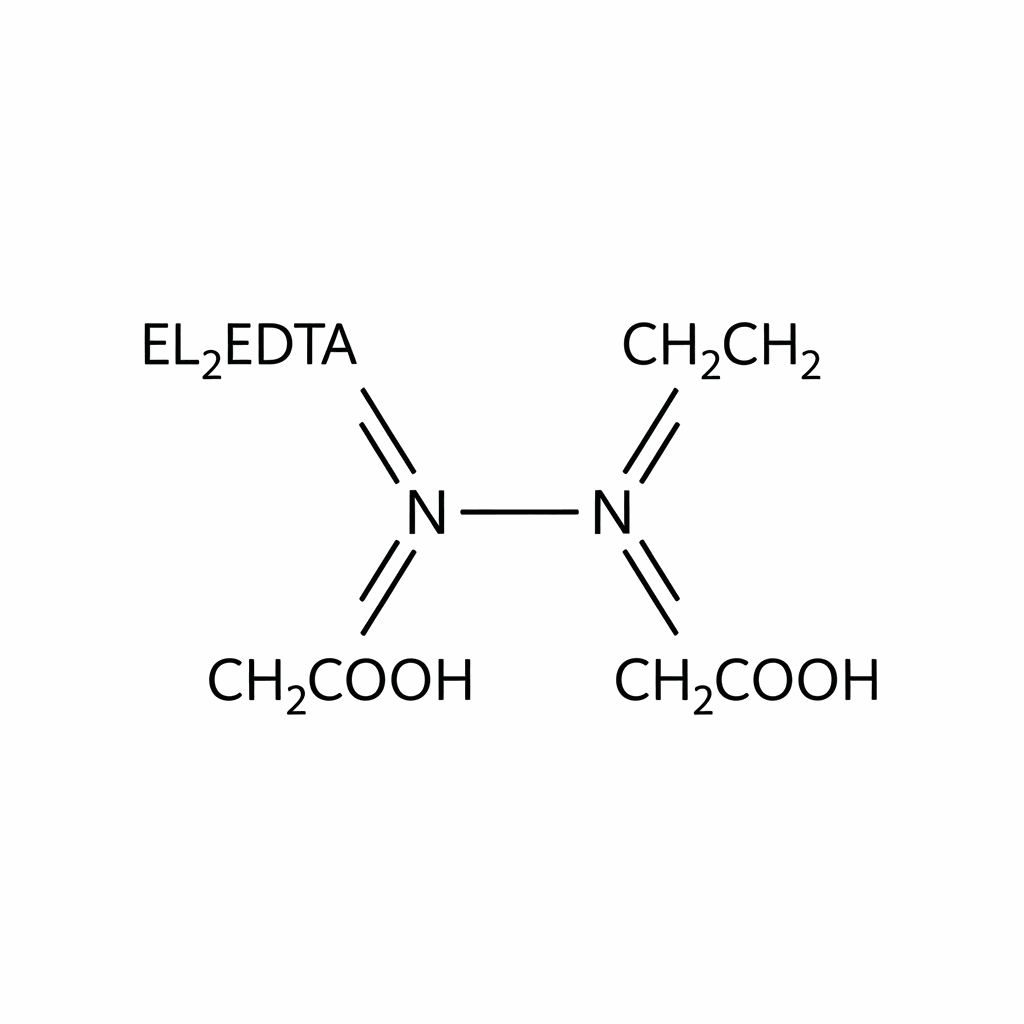
Attributes

Key Features and Benefits

  • High Chelating Efficiency: Forms stable 1:1 stoichiometric complexes with a broad spectrum of di- and trivalent metal cations.
  • Thermal and Chemical Stability: Maintains integrity under high-temperature processing and across a wide range of pH environments.
  • Scale Prevention: Effectively inhibits the precipitation of mineral salts, protecting industrial equipment from lime scale and fouling.
  • Preservative Synergy: Enhances the efficacy of antimicrobial agents in formulations by destabilizing bacterial cell membranes through metal ion depletion.
  • Oxidation Inhibition: Prevents metal-catalyzed degradation of organic compounds, extending the shelf life of sensitive chemical products.
  • Customizable Solubility: The acid form can be converted into various salt forms in situ to meet specific solubility requirements.
Specifications

Technical Highlights

  • Molecular Formula: $C_{10}H_{16}N_2O_8$ (Molar Mass: 292.24 g/mol).
  • Coordination Chemistry: Acts as a hexadentate ligand, utilizing two nitrogen atoms and four carboxylate oxygen atoms to “wrap” around a metal ion.
  • Dissociation Constants (pKa): Features four carboxylic pKa values (approximately 2.0, 2.7, 6.16, and 10.26), allowing for tiered reactivity based on pH.
  • Physical State: Decomposes at 240°C without melting.
  • Solubility Profile: Poorly soluble in water and common organic solvents, but highly soluble in alkaline solutions (forming salts).
  • Purity Standards: Typically available in 99%+ purity grades to ensure minimal interference in sensitive analytical applications.

Download Technical Data Sheet (TDS)

Practical industry uses

Applications

  • Water Treatment: Employed in boilers and cooling towers to sequester hardness ions and prevent calcium/magnesium scale buildup.
  • Industrial Cleaning: A key component in heavy-duty detergents and degreasers to improve surfactant performance in hard water conditions.
  • Textile Processing: Used during dyeing and bleaching to prevent trace metal ions from causing uneven coloring or fabric degradation.
  • Pharmaceuticals & Cosmetics: Acts as a stabilizer to prevent the oxidation of active ingredients, oils, and fats in creams and solutions.
  • Analytical Chemistry: Serves as a foundational reagent for complexometric titrations to quantify metal ion concentrations in laboratory settings.
  • Agriculture: Used to produce chelated micronutrients, ensuring that essential minerals like zinc and iron remain bioavailable to crops.
Key Sectors

Target Industries

Discover more

Related products

Key Sectors

We’re Here to Support Your Chemical Sourcing Needs

Have a question or need a quote? Our team is here to help with product details, pricing, and global delivery options.

Send a message to us

Your email address will not be published. Required fields are marked *