Ethylene Glycol Phenyl Ether (EPH)
Glycol Ethers, High-Purity Solvents

Ethylene Glycol Phenyl Ether (EPH)

Ethylene Glycol Phenyl Ether (EPH), systematically known as 2-Phenoxyethanol, is a versatile aromatic glycol ether with the molecular formula $C_8H_{10}O_2$. It is a high-boiling, slow-evaporating, colorless, and slightly oily liquid with a faint, pleasant balsamic odor. Chemically, it is produced by the hydroxyethylation of phenol. EPH is distinguished by its dual-functional nature, containing both an ether linkage and a hydroxyl group, which allows it to act as an exceptional solvent for both polar and non-polar substances.

In the global chemical market, EPH is a critical component across diverse industries. It is most recognized as a “gold standard” preservative in the personal care and cosmetic industry due to its potent antimicrobial properties against Gram-negative bacteria. Furthermore, its high boiling point and low vapor pressure make it an ideal coalescing agent in water-borne coatings and a primary solvent in high-quality printing inks. Its chemical stability and compatibility with various surfactants and resins make it a foundational ingredient in modern industrial and consumer formulations.

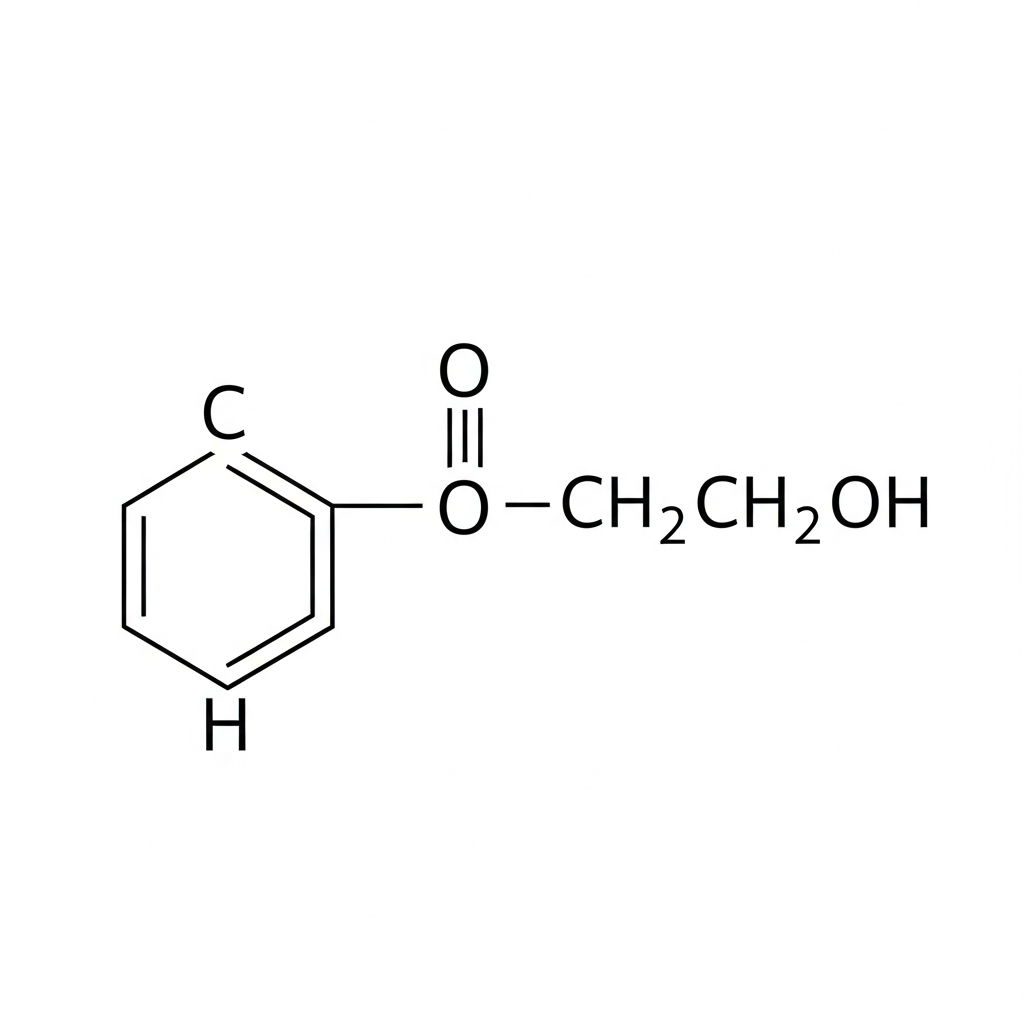
Attributes

Key Features and Benefits

**Broad-Spectrum Preservation:** Exhibits excellent efficacy against bacteria, yeasts, and molds, extending the shelf life of aqueous formulations.
**Superior Solvency:** Effectively dissolves various resins, cellulose acetate, dyes, and specialized oils, bridging the gap between oil and water phases.
**Low Volatility:** Its low vapor pressure reduces Volatile Organic Compound (VOC) emissions, contributing to safer working environments and better film formation in coatings.
**pH Stability:** Maintains chemical integrity and performance across a wide pH range (3–10), offering significant formulation flexibility.
**Fixative Properties:** Acts as a fragrance fixative, slowing the evaporation of volatile aromatic components in perfumes and soaps.
**Excellent Compatibility:** Can be used in combination with other preservatives (like parabens or potassium sorbate) to achieve synergistic antimicrobial effects.

Specifications

Technical Highlights

**CAS Number:** 122-99-6
**Molecular Weight:** 138.16 g/mol
**Boiling Point:** 244.3°C (471.7°F) at 760 mmHg, facilitating high-temperature stability.
**Flash Point:** 121°C (250°F) – Closed Cup, classifying it as a non-flammable liquid for standard storage.
**Vapor Pressure:** Very low (<0.01 mmHg at 20°C), ensuring minimal loss through evaporation.
**Specific Gravity:** 1.107 at 20°C (Water = 1.0).
**Solubility:** Moderately soluble in water (approx. 2.6% by weight at 20°C); completely miscible with ethanol, diethyl ether, and many organic solvents.
**Refractive Index:** 1.537–1.539, contributing to high optical clarity in transparent formulations.

Download Technical Data Sheet (TDS)

Practical industry uses

Applications

• Electrical and electronics
• Connectors, switches, PCB housings, terminal blocks
• Automotive
• Under-hood components, interior assemblies, cable conduits
• Wire and cable
• Insulation layers, sheathing, jacketing materials
• Construction
• Plastic fittings, conduits, insulation panels
• Consumer appliances
• Enclosures, adapters, plugs, casings
• Industrial components
• Fiber-reinforced composites, flame-retardant masterbatches
• Compatible polymers
• PA6, PA66
• PBT, PET
• PE, PP
• Blends and copolymers requiring halogen-free flame retardancy

Key Sectors

Target Industries

Discover more

Related products

Key Sectors

We’re Here to Support Your Chemical Sourcing Needs

Have a question or need a quote? Our team is here to help with product details, pricing, and global delivery options.

Send a message to us

Your email address will not be published. Required fields are marked *