High-Purity Solvents, Ketones

Isophorone

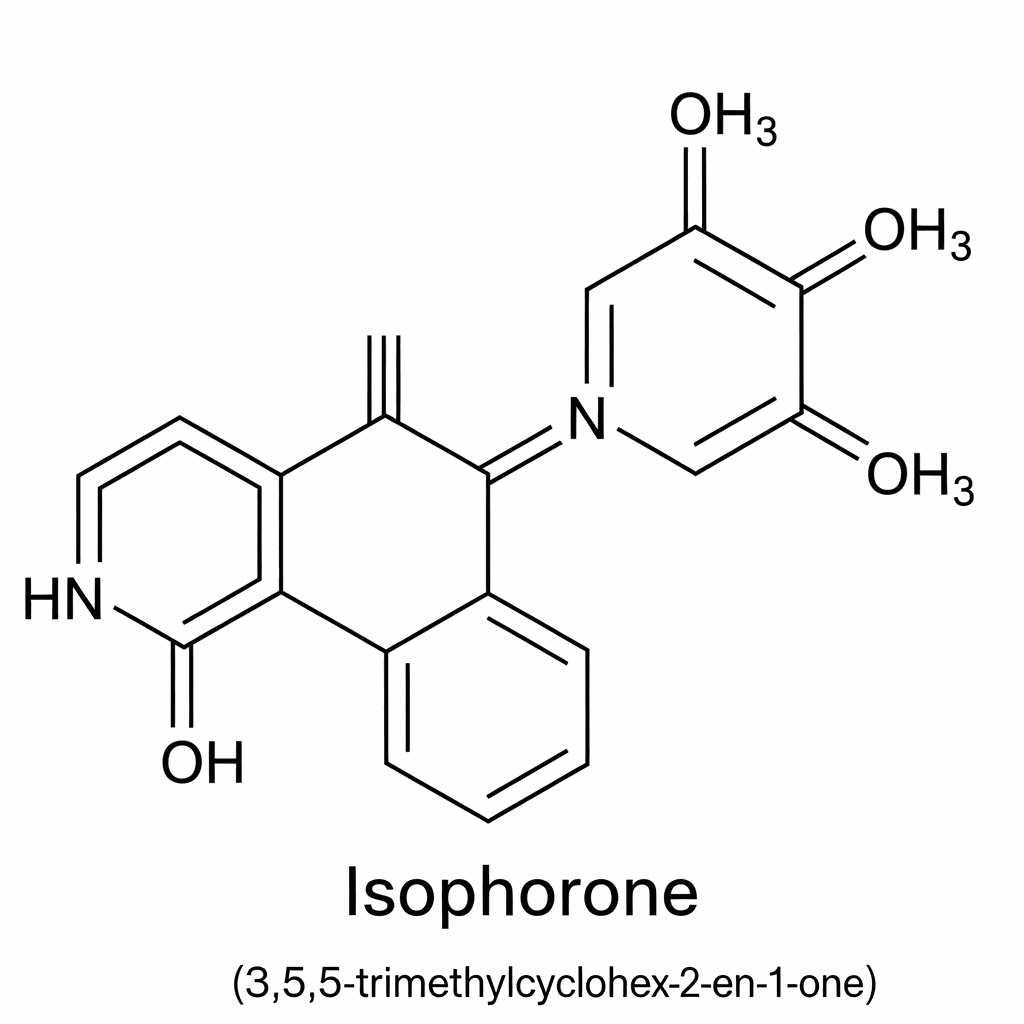
Isophorone, identified by CAS number 78-59-1, is a high-boiling, unsaturated cyclic ketone with a characteristic peppermint-like odor. This clear to yellowish liquid serves as a versatile industrial solvent and chemical intermediate. Produced via the catalytic condensation of acetone, it exhibits excellent solvency for a wide range of organic substances, including resins, polymers, and fats. Its unique molecular structure, featuring both a carbonyl group and a carbon-carbon double bond, makes it a valuable building block in organic synthesis. Isophorone is particularly prized for its slow evaporation rate and high flash point, which provide safety and performance advantages in demanding industrial environments. As a key precursor, it is used to manufacture isophorone diisocyanate and trimethylcyclohexanol. While essential in various manufacturing sectors, it requires careful handling due to its potential health effects and environmental persistence. Its stability and solubility characteristics ensure its continued relevance in formulating high-performance coatings, inks, and specialized agricultural chemicals.

Attributes

Key Features and Benefits

  • Exceptional solvency power for a diverse range of synthetic resins like nitrocellulose and vinyl polymers.
  • Low evaporation rate ensures significantly better flow and optimal leveling in high-end coating applications.
  • Provides excellent chemical stability under varied temperature and pressure conditions found in processing plants.
  • Elevated boiling point facilitates efficient use in specialized high-temperature industrial manufacturing processes.
  • Serves as a vital chemical intermediate for producing high-performance aliphatic polyurethane hardeners and coatings.
  • Relatively low volatility helps formulators reduce VOC emissions in specific solvent-borne industrial systems.
  • Fully miscible with most organic solvents, which significantly enhances overall formulation flexibility for chemists.
  • Superior pigment wetting properties greatly improve dispersion quality in industrial inks and paints.
Specifications

Technical Highlights

  • Chemical Formula: C9H14O with a precise molecular weight of 138.21 g/mol.
  • Boiling Point: 215.2°C at 760 mmHg, indicating a low vapor pressure and low volatility.
  • Flash Point: 84°C (closed cup method), classifying the substance as a combustible industrial liquid.
  • Density: Approximately 0.92 g/cm³ when measured at standard 20°C temperature.
  • Water Solubility: Slightly soluble, approximately 1.2 g/100 mL, at room temperature conditions.
  • Reactivity: Features a unique conjugated system containing both carbonyl and carbon-carbon double bonds.
  • Synthesis: Industrially derived from the aldol condensation of three distinct acetone molecules.
  • Purity: Available at high levels typically exceeding 99% for strict manufacturing requirements.

Download Technical Data Sheet (TDS)

Practical industry uses

Applications

  • Primary solvent in vinyl and epoxy-based surface coatings, providing excellent flow for lacquers and industrial finishes.
  • Key chemical intermediate used specifically in the large-scale production of Isophorone Diisocyanate (IPDI) for polyurethanes.
  • Utilized extensively in the precise formulation of herbicides and pesticides to enhance active ingredient delivery in agriculture.
  • Vital ingredient in screen printing inks designed for high-adhesion applications on plastic and metal substrates.
  • Crucial component in the manufacture of high-strength industrial adhesives and specialized elastomeric sealants.
  • Used as a highly effective leveling agent in demanding automotive and appliance surface finishes.
  • Building block for the complex synthesis of fragrances and vitamin E.
Key Sectors

Target Industries

Discover more

Related products

Key Sectors

We’re Here to Support Your Chemical Sourcing Needs

Have a question or need a quote? Our team is here to help with product details, pricing, and global delivery options.

Send a message to us

Your email address will not be published. Required fields are marked *