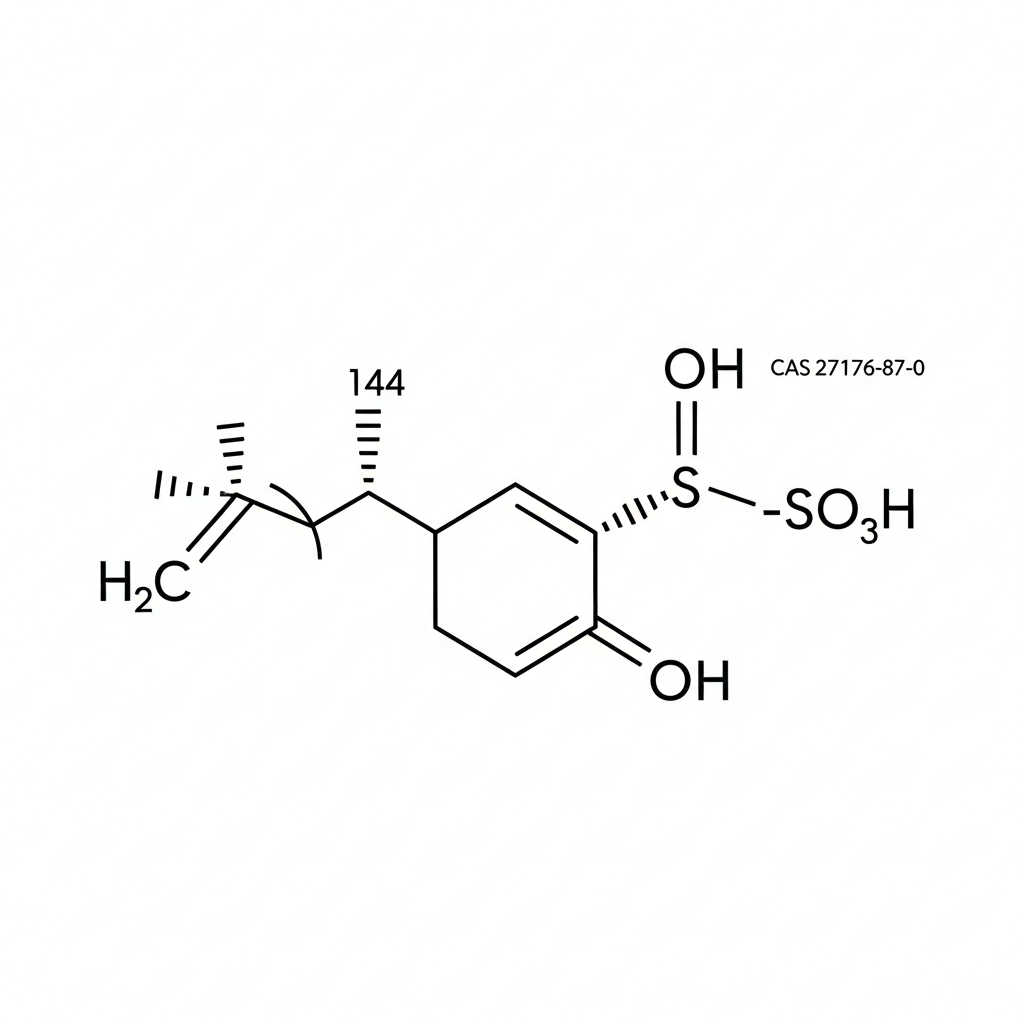
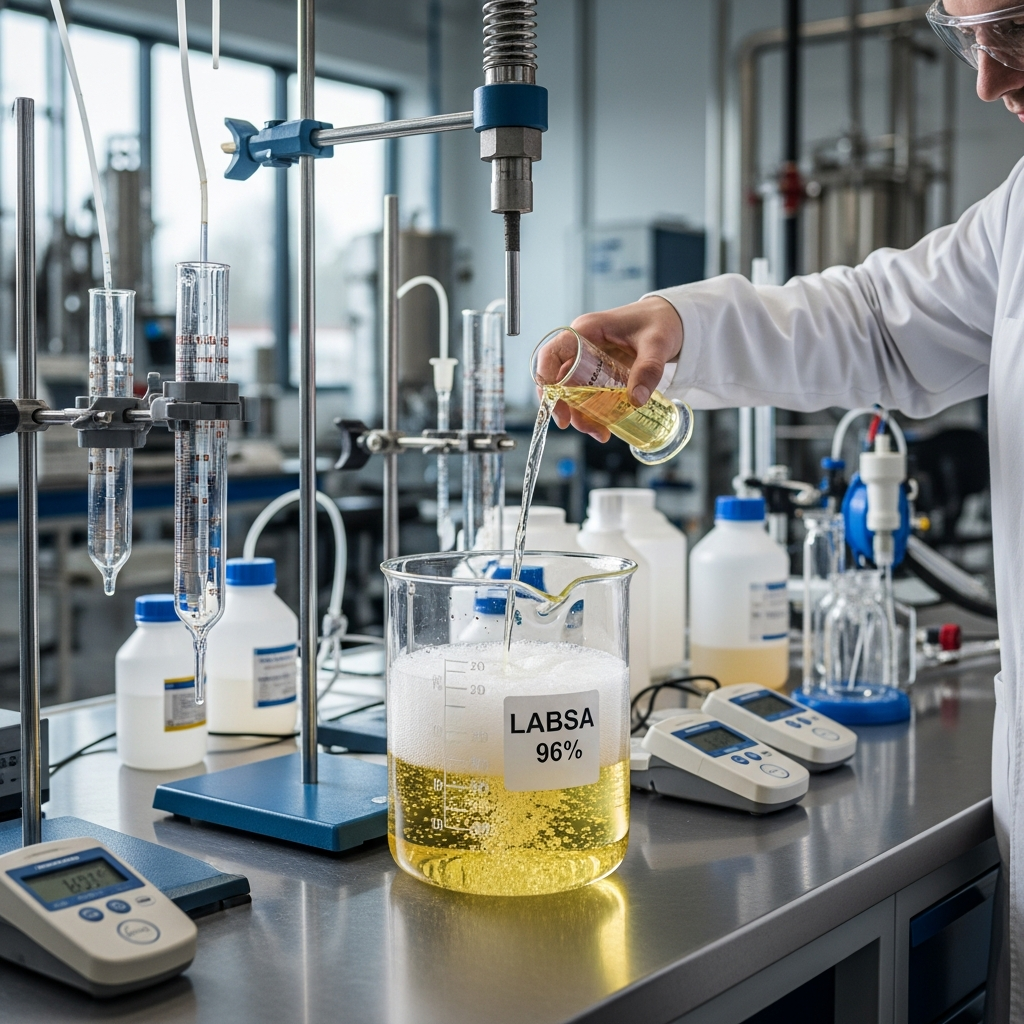
Linear Alkyl Benzene Sulphonic Acid, commonly known as LABSA, is a synthetic surfactant of the anionic type, produced through the sulfonation of Linear Alkyl Benzene (LAB). It is one of the most critical and widely utilized surfactants in the global chemical industry due to its high efficacy and cost-effectiveness. Physically, it appears as a highly viscous, dark brown liquid with a characteristic pungent odor.
LABSA is prized primarily for its versatility; it serves as a fundamental building block for the production of various cleaning agents. While it is highly acidic in its concentrated form, it is typically neutralized with caustic soda (Sodium Hydroxide) to produce Sodium Linear Alkyl Benzene Sulfonate (LAS). Its transition from branched alkylbenzene sulfonates (BAS) to linear structures (LABSA) in the mid-20th century marked a significant environmental milestone, as the linear chain ensures rapid aerobic biodegradation, preventing persistent foam in wastewater treatment systems.
**Superior Detergency:** Provides exceptional removal of oily stains and soils through high surface activity and micelle formation.
**Biodegradability:** Meets stringent environmental standards for rapid breakdown into non-toxic components, minimizing ecological impact.
**Cost-Efficiency:** One of the most economical anionic surfactants available, offering high performance at a lower price point than fatty alcohol sulfates.
**Synergistic Properties:** Demonstrates excellent compatibility with other anionic, non-ionic, and amphoteric surfactants, enhancing overall formulation performance.
**Chemical Stability:** Highly stable during storage and maintains effectiveness across a wide range of water hardness and temperature conditions.
**Foaming Ability:** Produces stable, rich foam, which is an essential aesthetic and functional requirement for consumer detergent products.
**Active Matter Content:** Commercial grades typically offer a high concentration of active matter, generally ≥96%.
**Low Free Oil:** Contains minimal unsulfonated matter (usually <2%), ensuring high solubility and performance in the final product.
**Sulfuric Acid Content:** Residual $H_2SO_4$ is strictly controlled (typically <1.5%) to manage viscosity and neutralization requirements.
**Molecular Weight:** Average molecular weight ranges between 320 and 326 g/mol, depending on the alkyl chain distribution.
**Acid Value:** Characterized by a high acid value (approx. 180–190 mg KOH/g), necessitating careful handling and neutralization.
**Solubility:** Fully miscible in water and polar solvents, though its viscosity increases significantly upon partial dilution or neutralization (the “gel phase”).
• Electrical and electronics
• Connectors, switches, PCB housings, terminal blocks
• Automotive
• Under-hood components, interior assemblies, cable conduits
• Wire and cable
• Insulation layers, sheathing, jacketing materials
• Construction
• Plastic fittings, conduits, insulation panels
• Consumer appliances
• Enclosures, adapters, plugs, casings
• Industrial components
• Fiber-reinforced composites, flame-retardant masterbatches
• Compatible polymers
• PA6, PA66
• PBT, PET
• PE, PP
• Blends and copolymers requiring halogen-free flame retardancy

Have a question or need a quote? Our team is here to help with product details, pricing, and global delivery options.
Your email address will not be published. Required fields are marked *