Acrylates, High-Purity Solvents

Methacrylic Acid (MAA)

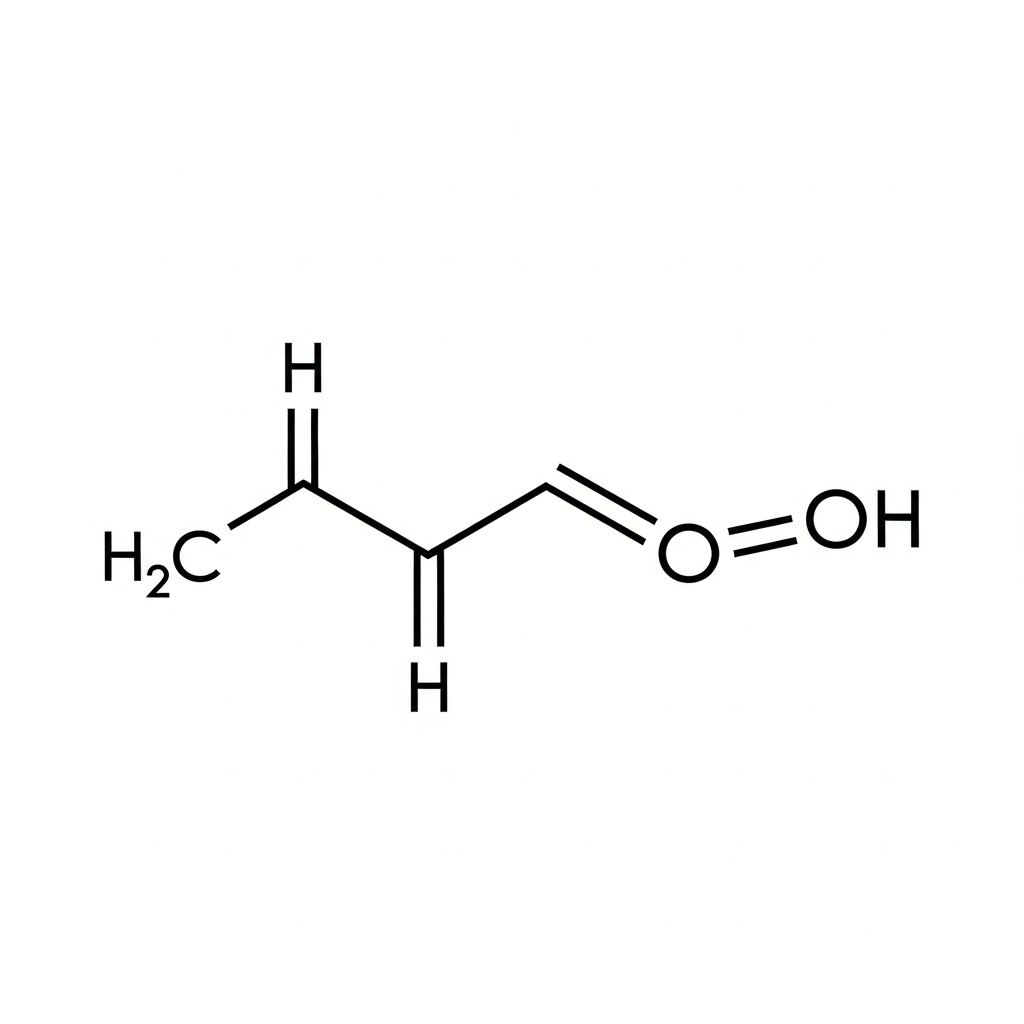
Methacrylic acid (MAA) is an alpha, beta-unsaturated monocarboxylic acid, formally known as 2-methylpropenoic acid. It is a clear, colorless, pungent liquid that exhibits high reactivity due to its vinyl and carboxylic acid functional groups. This bifunctionality allows MAA to undergo both free-radical polymerization and typical organic acid reactions such as esterification. At room temperature, MAA is soluble in water and miscible with most organic solvents like ethanol and diethyl ether. It is a critical monomer in the polymer industry, serving as a building block for various acrylic resins and specialty polymers. Because it polymerizes readily upon exposure to heat, light, or oxygen, commercial grades are typically stabilized with inhibitors like hydroquinone monomethyl ether (MEHQ). Its acidic nature necessitates careful handling, as it is corrosive to skin and metals. MAA plays a vital role in enhancing adhesion, hardness, and thermal stability in diverse chemical formulations across many key global industrial sectors.
Attributes

Key Features and Benefits

  • Exceptional bifunctionality through both its reactive vinyl group and carboxylic acid site, enabling diverse chemical synthesis pathways.
  • Superior water solubility compared to higher alkyl methacrylates, facilitating its use in aqueous emulsion and solution polymerization processes.
  • Significant improvement of polymer adhesion to polar substrates and metals by introducing carboxyl groups into the polymer backbone.
  • Enhanced freeze-thaw stability and mechanical strength in latex coatings when incorporated as a co-monomer in small percentages.
  • High purity manufacturing processes ensure low impurity levels, which is crucial for producing high-performance optical and contact lens materials.
Specifications

Technical Highlights

  • Molecular Formula and Weight: C4H6O2 with a molar mass of 86.09 g/mol, featuring a density of approximately 1.015 g/cm3.
  • Thermal Constants: Boiling point is 161 degrees Celsius at atmospheric pressure, and the melting point is 15 degrees Celsius.
  • Vapor Pressure and Flash Point: Flash point is 67 degrees Celsius (closed cup), with a vapor pressure of 0.13 kPa at 20C.
  • Acidity and Solubility: Exhibits a pKa of 4.66 and is miscible in water, alcohols, ethers, and most common organic solvents.
  • Inhibitor Content: Standard commercial grades typically contain 100 to 250 ppm of hydroquinone monomethyl ether to prevent spontaneous polymerization.

Download Technical Data Sheet (TDS)

Practical industry uses

Applications

  • Production of methacrylate esters such as methyl methacrylate, butyl methacrylate, and higher alkyl esters for various specialty applications.
  • Formulation of architectural coatings and industrial paints to improve pigment dispersion, film durability, and overall substrate adhesion properties.
  • Synthesis of ion-exchange resins and thickeners used in water treatment, textiles, and personal care products like hair styling gels.
  • Manufacturing of glass-fiber reinforced plastics and adhesives where it acts as a coupling agent to enhance cross-linking density.
  • Development of biocompatible polymers for medical devices, specifically dental cements and soft contact lenses due to its hydrophilicity.
Key Sectors

Target Industries

Discover more

Related products

Key Sectors

We’re Here to Support Your Chemical Sourcing Needs

Have a question or need a quote? Our team is here to help with product details, pricing, and global delivery options.

Send a message to us

Your email address will not be published. Required fields are marked *