High-Purity Solvents, Polyurethane (PU) and Resin

N-Dimethylcyclohexylamine (DMCHAN)

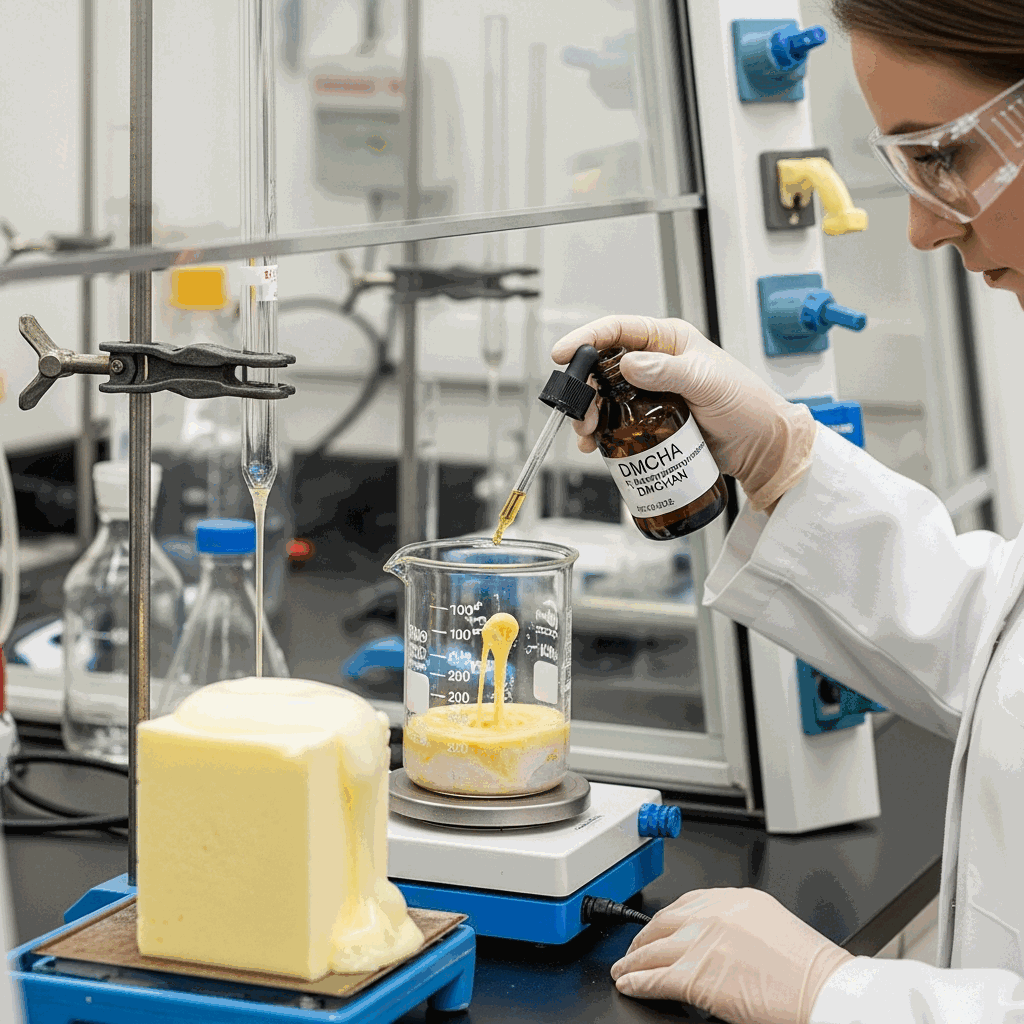
N,N-Dimethylcyclohexylamine, commonly referred to as DMCHA (CAS: 98-94-2), is a highly efficient tertiary amine catalyst widely utilized in the polymer and chemical synthesis industries. It appears as a clear, colorless to light yellow liquid with a characteristic amine odor. Chemically, it is a cycloaliphatic tertiary amine that functions as a strong base. DMCHA is primarily recognized for its dual-action catalytic capability, effectively balancing the blowing reaction (isocyanate and water) and the gelling reaction (isocyanate and polyol) in polyurethane production. Due to its high reactivity and versatility, it is a staple in the manufacturing of rigid polyurethane foams, where rapid curing and structural integrity are paramount. Beyond its role in polyurethanes, DMCHA serves as a critical intermediate for the production of quaternary ammonium compounds, fuel additives, and corrosion inhibitors. Given its flammable and corrosive nature, it requires specialized handling and storage to ensure industrial safety.

Attributes

Key Features and Benefits

  • Optimal Reaction Balance: Provides an excellent equilibrium between the blowing and gelling reactions, leading to uniform cell structures in foams.
  • High Reactivity: Allows for low loading levels while maintaining high production speeds and rapid demolding times.
  • Broad Compatibility: Highly miscible with a variety of polyols, surfactants, and blowing agents (including HCFCs, HFCs, and pentanes).
  • Improved Foam Quality: Enhances the dimensional stability, compressive strength, and thermal insulation (k-factor) of finished rigid foams.
  • Cost-Effectiveness: Its high catalytic potency makes it a more economical choice compared to many specialty tertiary amines.
  • Versatile Processing: Suitable for use in both pour-in-place applications and continuous production lines.
Specifications

Technical Highlights

  • Molecular Formula: C8H17N (Molecular Weight: 127.23 g/mol).
  • Physical State: Liquid with a specific gravity of approximately 0.85 at 25°C.
  • Boiling Point: Approximately 160°C (320°F) at 760 mmHg.
  • Flash Point: 40°C–41°C (104°F) (Closed Cup), classifying it as a GHS Category 3 flammable liquid.
  • Vapor Pressure: ~4.0 mmHg at 25°C, requiring adequate ventilation during use.
  • Alkalinity: Strong base with high pH; highly corrosive to skin, eyes, and copper-based alloys.
  • Solubility: Readily soluble in common organic solvents (acetone, benzene, alcohols) but only sparingly soluble in water.
  • Stability: Stable under normal temperatures; sensitive to carbon dioxide and moisture.

Download Technical Data Sheet (TDS)

Practical industry uses

Applications

  • Rigid Polyurethane Foam: The primary catalyst for manufacturing refrigerator cabinets, walk-in coolers, and insulated sandwich panels.
  • Spray Polyurethane Foam (SPF): Essential for residential and commercial building insulation to ensure rapid setting and vertical cling.
  • Polyisocyanurate (PIR) Foams: Used to catalyze the trimerization and cross-linking in fire-resistant insulation boards.
  • Automotive Industry: Employed in the production of semi-rigid foams for headrests, armrests, and vibration-dampening components.
  • Chemical Synthesis: Acts as an intermediate for the production of quaternary ammonium salts used as biocides or fabric softeners.
  • Fuel Additives: Utilized in the formulation of specialized corrosion inhibitors and fuel stabilizers.
  • Agrochemicals: Serves as a catalyst or neutralizer in the synthesis of various pesticides and herbicides.
Key Sectors

Target Industries

Discover more

Related products

Key Sectors

We’re Here to Support Your Chemical Sourcing Needs

Have a question or need a quote? Our team is here to help with product details, pricing, and global delivery options.

Send a message to us

Your email address will not be published. Required fields are marked *