High-Purity Solvents, Personal Care

N-Octyl Amine

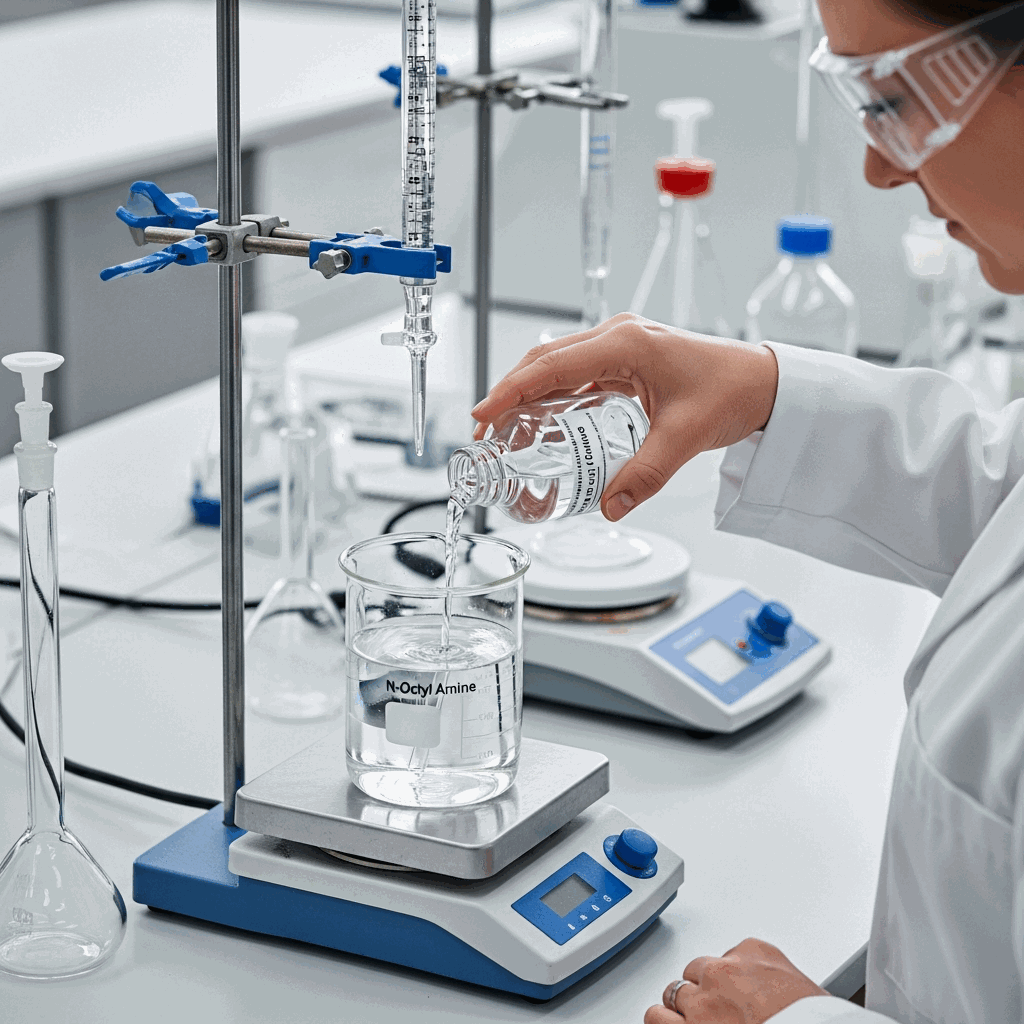
N-Octyl Amine, also known as 1-octanamine (CAS: 111-86-4), is a primary aliphatic amine characterized by a straight-chain eight-carbon saturated backbone. As a key member of the fatty amine family, it serves as a versatile building block in industrial chemistry, bridging the functional gap between short-chain alkylamines and longer-chain fatty amines. Structurally, it consists of a hydrophobic tail and a highly reactive hydrophilic primary amino group, which imparts significant surface-active properties.

In its pure state, N-Octyl Amine is a colorless to pale yellow liquid with a characteristic pungent, ammoniacal odor. It is nearly insoluble in water but exhibits excellent miscibility with most organic solvents, including alcohols, ethers, and hydrocarbons. Its chemical reactivity is driven by the lone pair of electrons on the nitrogen atom, allowing it to undergo acylation, alkylation, and salt formation. This makes it indispensable for synthesizing surfactants, corrosion inhibitors, and agricultural intermediates where high purity and controlled molecular weight are critical.

Attributes

Key Features and Benefits

  • High Chemical Reactivity: The primary amino group enables efficient conversion into amides, imines, and quaternary ammonium salts for diverse downstream applications.
  • Balanced Hydrophobicity: The C8 alkyl chain provides optimal oil solubility and hydrophobic character without the excessive viscosity associated with longer-chain amines.
  • Superior Solubility Profile: It is easily incorporated into non-polar formulations and organic systems, facilitating its use in oil-based industrial processes.
  • Low Volatility: Compared to lower-chain amines, it possesses a higher boiling point, which reduces evaporative losses and enhances safety during high-temperature processing.
  • High Purity Grade: Typically manufactured at ≥99% purity, ensuring predictable performance in sensitive pharmaceutical and agrochemical syntheses.
Specifications

Technical Highlights

  • Molecular Profile: Molecular Weight: 129.24 g/mol; Linear Formula: $CH_3(CH_2)_7NH_2$.
  • Physical Constants: Boiling point of approximately 175–179°C; Melting point of -1°C; Density of 0.782 g/mL at 25°C.
  • Thermal Data: Flash point of 62°C (143.6°F), classifying it as a combustible liquid requiring appropriate storage precautions.
  • Alkalinity: Acts as a strong organic base, forming stable crystalline salts when reacted with mineral or organic acids.
  • Refractive Index: $n20/D$ 1.429, helpful for purity verification in laboratory settings.
  • Regulatory Status: Listed on major global inventories, including TSCA (USA), DSL (Canada), and REACH (Europe).

Download Technical Data Sheet (TDS)

Practical industry uses

Applications

  • Surfactant Synthesis: Used as a precursor for amphoteric surfactants and amine oxides in personal care products and industrial detergents.
  • Corrosion Inhibition: Formulated into metalworking fluids and oilfield chemicals to protect ferrous metals from oxidation and acid attack.
  • Agrochemicals: Serves as a critical intermediate in the production of specific herbicides, fungicides, and plant growth regulators.
  • Mining & Flotation: Employed as a collector agent in froth flotation processes for the separation of silicate minerals and ores.
  • Polymer Additives: Utilized as a vulcanization accelerator in rubber processing and as an antistatic agent in plastics.
  • Specialty Intermediates: Applied in the synthesis of dyes, pharmaceutical active ingredients (APIs), and fuel additives.
Key Sectors

Target Industries

Discover more

Related products

Key Sectors

We’re Here to Support Your Chemical Sourcing Needs

Have a question or need a quote? Our team is here to help with product details, pricing, and global delivery options.

Send a message to us

Your email address will not be published. Required fields are marked *