High-Purity Solvents, Water Treatments

Phosphoric Acid

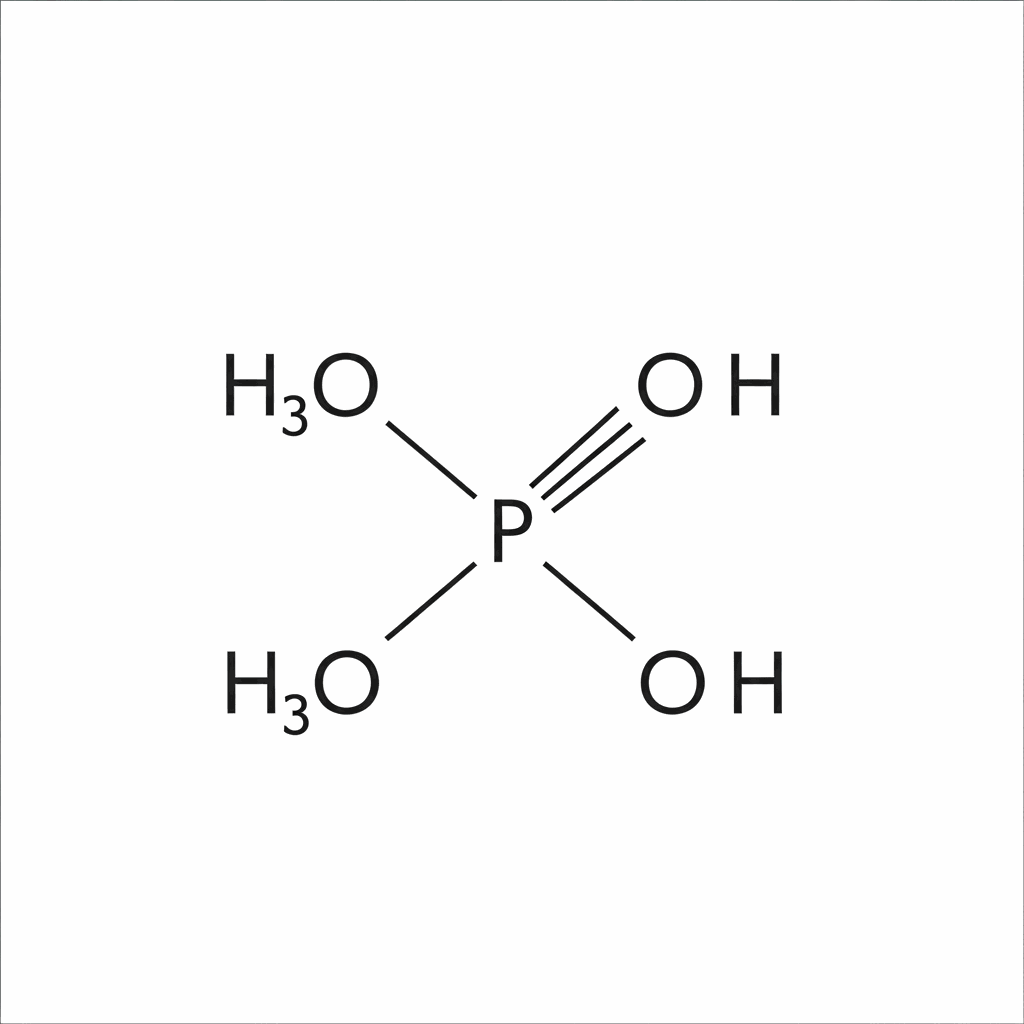
Phosphoric acid, also known as orthophosphoric acid, is a mineral acid with the chemical formula H3PO4. In its pure form, it is a colorless, crystalline solid, but it is most commonly encountered as a viscous, clear, and odorless liquid, typically in aqueous solutions of 75% to 85% concentration. This inorganic compound is an essential chemical intermediate used across diverse industries, from agriculture to food processing. As a triprotic acid, it can release three hydrogen ions, making it highly versatile in chemical synthesis and pH regulation. It is non-volatile and possesses moderate acidity compared to stronger mineral acids like sulfuric or hydrochloric acid. Phosphoric acid occurs naturally in various minerals and is vital for biological processes, forming the backbone of DNA, RNA, and ATP. Industrially, it is produced primarily via the wet process or the thermal process, ensuring high purity for specific applications. Its stability and reactivity make it indispensable globally.

Attributes

Key Features and Benefits

  • Exceptional purity levels available for food and electronic grades.
  • Strong sequestering agent capability for metal ions in various solutions.
  • Effective pH regulator providing precise control in chemical formulations.
  • Non-toxic nature when used in diluted food-grade concentrations.
  • Acts as a powerful rust converter by transforming iron oxide into phosphate.
  • Enhances the shelf life and flavor profile of carbonated beverages.
  • Facilitates efficient nutrient uptake in agricultural fertilizer applications.
  • Highly stable under normal storage conditions with low volatility.
  • Cost-effective solution for industrial scale metal surface treatments and cleaning.
  • Compatible with numerous organic and inorganic chemical compounds.
  • Provides essential phosphorus for diverse synthetic processes.
Specifications

Technical Highlights

  • Molecular weight: 97.99 g/mol with a density of 1.88 g/cm³.
  • Triprotic acid characteristics with pKa values of 2.15, 7.20, and 12.35.
  • Boiling point reaches 158°C at standard atmospheric pressure for concentrated solutions.
  • Melting point for 100% anhydrous acid is approximately 42.35°C.
  • Exhibits high hygroscopic properties, readily absorbing moisture from the surrounding environment.
  • Formed through the reaction of phosphate rock with sulfuric acid industrially.
  • Viscosity increases significantly with concentration, reaching 147 cP for 85% solutions.
  • Highly soluble in water and ethanol, forming clear, stable mixtures.
  • Non-oxidizing acid profile at low temperatures compared to concentrated nitric acid.
  • Refractive index measured at 1.342 for 85% aqueous concentrations.

Download Technical Data Sheet (TDS)

Practical industry uses

Applications

  • Primary component in manufacturing essential phosphate fertilizers today.
  • Used as a food additive (E338) for acidification in colas.
  • Essential for rust removal and metal passivation in automotive sectors.
  • Utilized in dentistry as an etching solution for cleaning teeth surfaces.
  • Chemical reagent for the production of industrial detergents and soaps.
  • Acts as an electrolyte in phosphoric acid fuel cell technologies.
  • Important in the textile industry for dyeing and finishing processes.
  • Feed additive for livestock to ensure proper bone development and health.
  • Water treatment chemical for controlling lead leaching in piping systems.
  • Catalyst in the synthesis of ethyl alcohol from ethylene sources.
Key Sectors

Target Industries

Discover more

Related products

Key Sectors

We’re Here to Support Your Chemical Sourcing Needs

Have a question or need a quote? Our team is here to help with product details, pricing, and global delivery options.

Send a message to us

Your email address will not be published. Required fields are marked *