High-Purity Solvents, Polyurethane (PU) and Resin

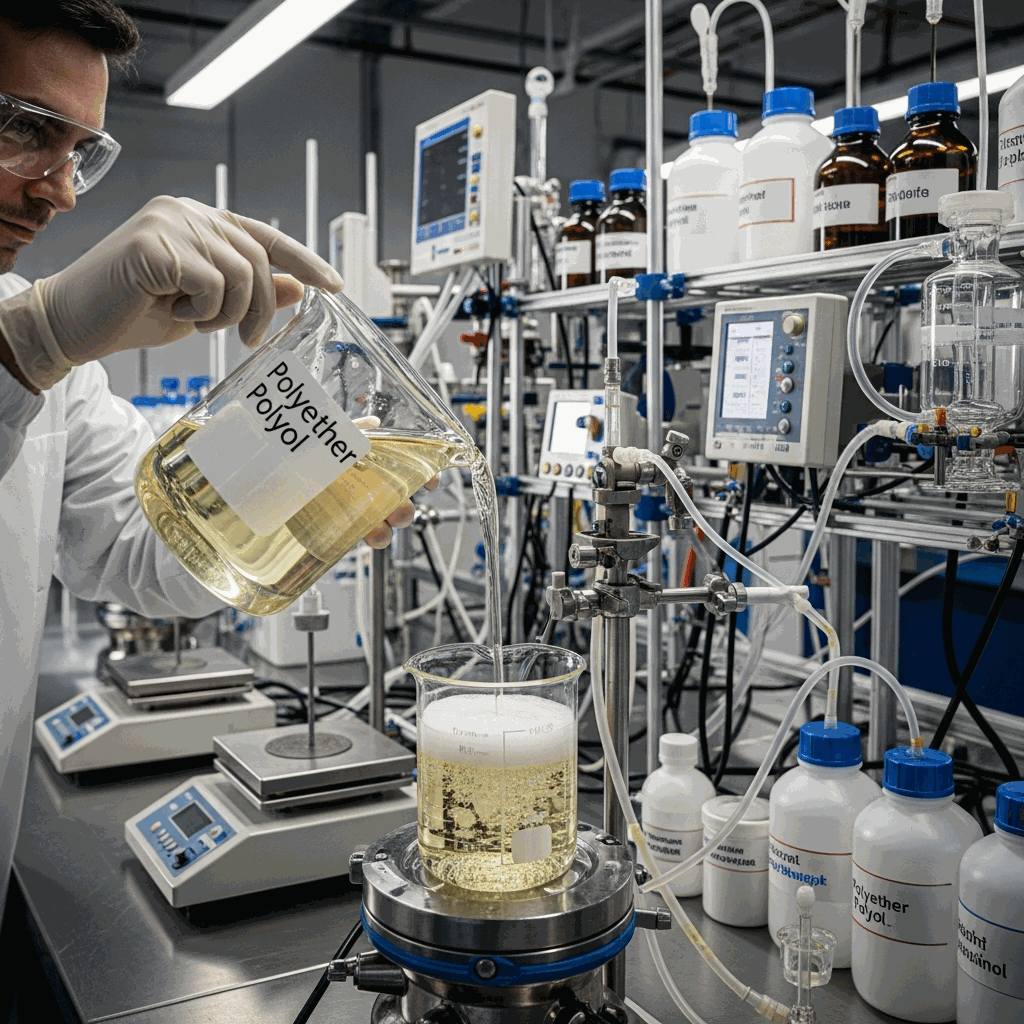
Polyether Polyol

Polyether polyols are key intermediate polymers used extensively in the production of polyurethanes (PU). They are synthesized through the ring-opening polymerization of alkylene oxides—primarily propylene oxide (PO) and ethylene oxide (EO)—onto an initiator molecule containing active hydrogen atoms, such as water, ethylene glycol, glycerin, or sucrose. The resulting molecule consists of repeating ether linkages (-R-O-R-) with terminal hydroxyl (-OH) groups.

The choice of initiator determines the functionality (the number of reactive sites), while the degree of polymerization dictates the molecular weight. These variables allow for the creation of a diverse range of polyols, from low-molecular-weight diols used in elastomers to high-functionality, highly branched polyols used in rigid insulation foams. Polyether polyols are favored over polyester polyols for their superior hydrolytic stability, low viscosity, and excellent low-temperature flexibility, making them the backbone of the global polyurethane industry.

Attributes

Key Features and Benefits

  • Hydrolytic Stability: Excellent resistance to degradation by water and moisture compared to polyester-based polyols.
  • Low Viscosity: Facilitates ease of handling, efficient pumping, and superior mixing during industrial processing.
  • Tailored Reactivity: Reaction rates can be adjusted by “EO-capping,” which increases the primary hydroxyl content for faster processing.
  • Flexibility: Provides high elasticity and elongation at break, essential for comfort applications.
  • Fungal Resistance: Inherent resistance to microbial growth and enzymatic attack.
  • Cost-Effectiveness: Broad availability of raw materials and efficient large-scale manufacturing processes.
  • Low-Temperature Performance: Maintains structural integrity and flexibility in sub-zero environments.
Specifications

Technical Highlights

  • Hydroxyl Value (OH Value): Typically ranges from 20 to 800 mg KOH/g, providing precise stoichiometric control for isocyanate reactions.
  • Functionality: Ranges from 2.0 (linear) to 8.0 (highly branched), dictating the cross-link density of the final polymer.
  • Molecular Weight: Available in a wide spectrum from 200 to 12,000 Da, catering to both rigid and flexible PU requirements.
  • Low Unsaturation: Advanced Double Metal Cyanide (DMC) catalysis ensures low monol content and high structural uniformity.
  • Narrow Polydispersity: Controlled molecular weight distribution ensures consistent mechanical properties in the finished product.
  • Moisture Content: Strictly controlled (usually <0.05%) to minimize CO2 gas formation during urethane synthesis.

Download Technical Data Sheet (TDS)

Practical industry uses

Applications

  • Flexible Foams: The primary component in mattresses, upholstered furniture, and automotive seating for cushioning.
  • Rigid Foams: High-functionality polyols used for thermal insulation in appliances (refrigerators) and construction panels.
  • CASE Applications: Essential for the formulation of high-performance Coatings, Adhesives, Sealants, and Elastomers.
  • Automotive NVH: Used in Noise, Vibration, and Harshness (NVH) damping components and molded interior parts.
  • Footwear: Production of lightweight, durable, and shock-absorbing soles for athletic and safety shoes.
  • Industrial Lubricants: Utilized as synthetic base stocks for high-temperature lubricants and hydraulic fluids.
Key Sectors

Target Industries

Discover more

Related products

Key Sectors

We’re Here to Support Your Chemical Sourcing Needs

Have a question or need a quote? Our team is here to help with product details, pricing, and global delivery options.

Send a message to us

Your email address will not be published. Required fields are marked *