Acetates & Esters, High-Purity Solvents

Propyl Acetate

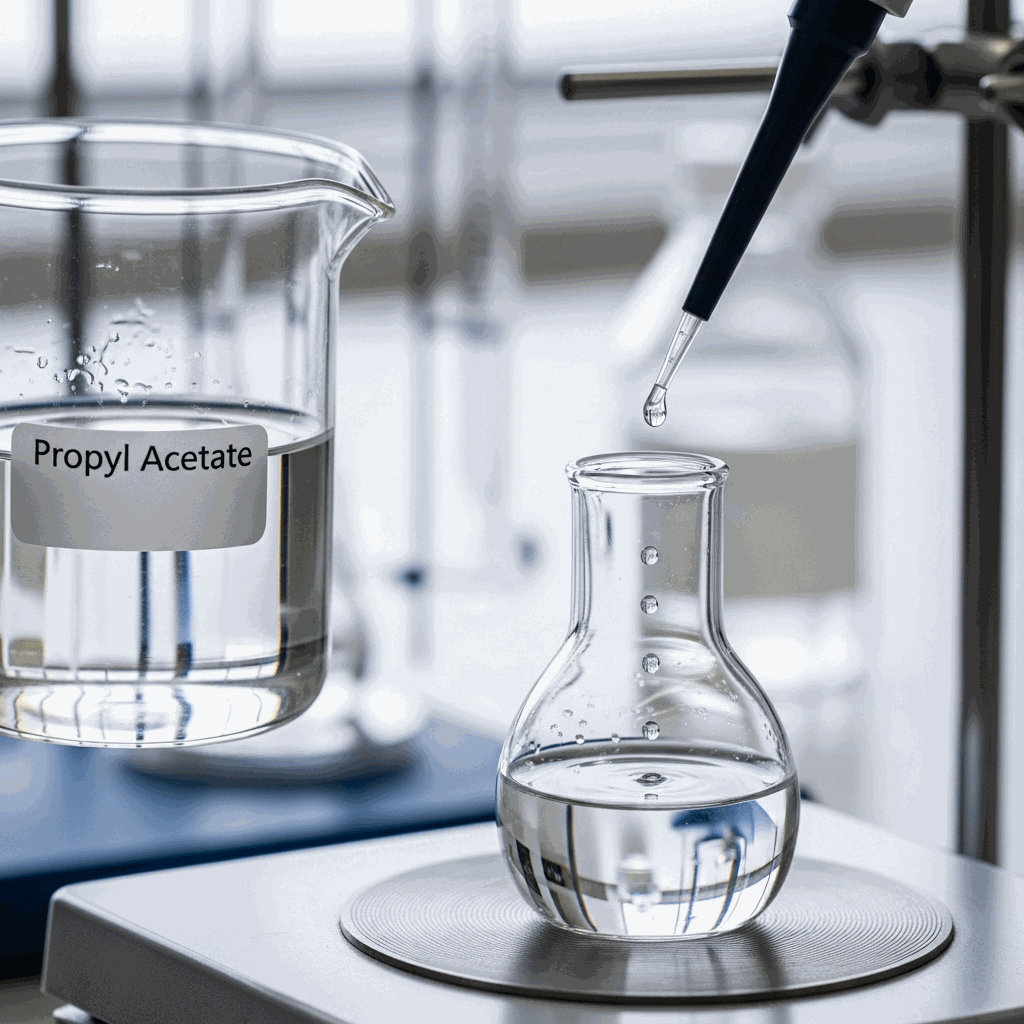
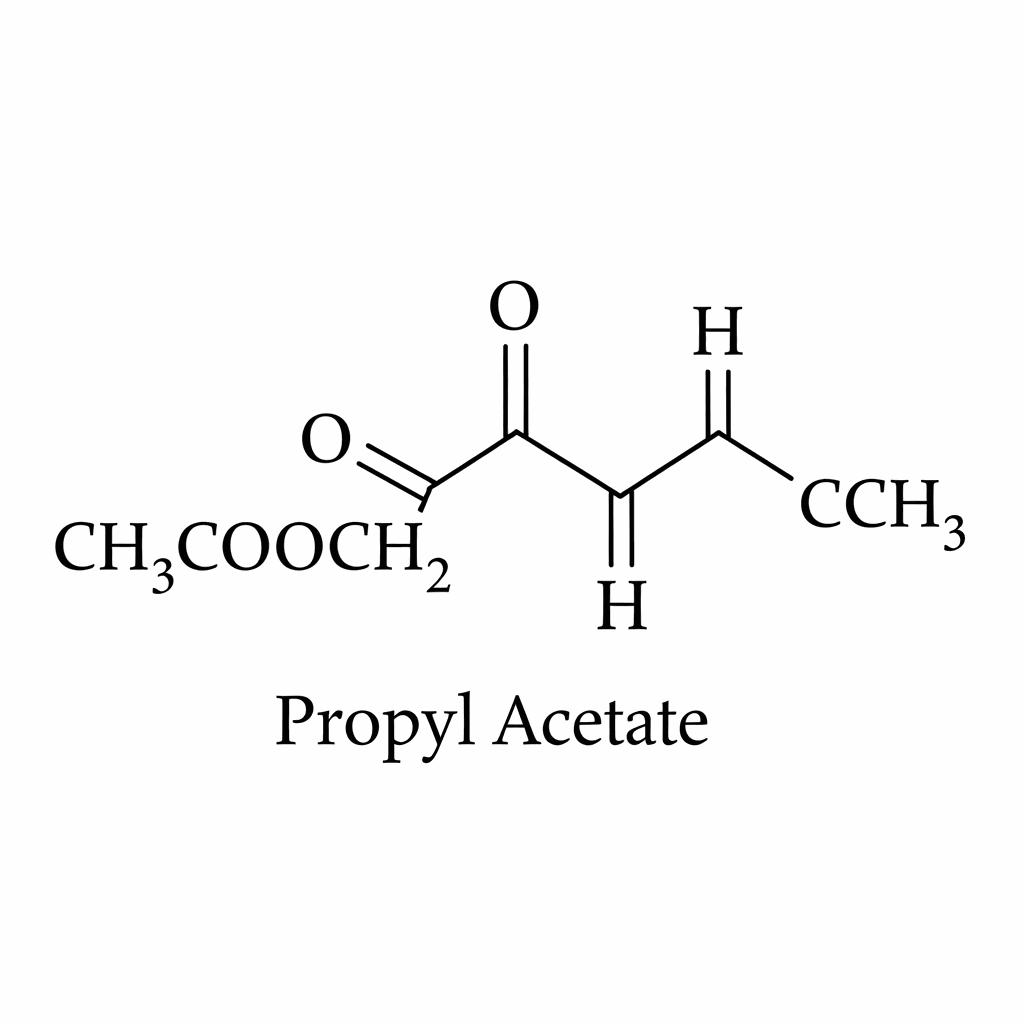
Propyl acetate, scientifically identified by CAS number 109-60-4, is a clear, colorless liquid ester formed through the chemical condensation of acetic acid and propanol. This volatile organic compound possesses a distinctive, pleasant fruity aroma, often likened to pears, making it a valuable component in the flavor and fragrance industries. Chemically, it exhibits moderate polarity and is highly miscible with most common organic solvents, including alcohols, ketones, and ethers, although it remains only slightly soluble in water. Its vapor density is greater than air, and it possesses a relatively low flash point, classifying it as a highly flammable liquid that requires careful storage and handling protocols. As a medium-evaporating solvent, propyl acetate provides a balanced evaporation rate that is critical in high-quality coating formulations. It serves as an effective diluent and solvent for various resins, including nitrocellulose, polyester, and alkyds, bridging the performance gap between fast ethyl acetate and slower solvents.

Attributes

Key Features and Benefits

  • Exhibits a balanced evaporation rate, situated between ethyl acetate and butyl acetate, facilitating optimal leveling and drying times in industrial coatings.
  • Features a distinct, sweet fruity odor profile, making it a preferred solvent for fragrance applications and food-grade flavoring compositions.
  • Demonstrates excellent solvency power for a wide range of natural and synthetic resins, including nitrocellulose, cellulose acetate butyrate, and various polyesters.
  • Provides low hygroscopicity, which prevents moisture blush in humid conditions during the application of high-performance lacquers and wood finishes.
  • Maintains high chemical purity and stability under normal storage conditions, ensuring consistent performance across diverse manufacturing and blending processes.
Specifications

Technical Highlights

  • Molecular formula is C5H10O2 with a molecular weight of 102.13 g/mol, characterized by a boiling point of approximately 101.5 degrees Celsius.
  • Flash point is recorded at 13 degrees Celsius (closed cup), requiring stringent explosion-proof equipment and grounding during industrial material transfer.
  • Specific gravity is approximately 0.888 at 20 degrees Celsius, with a refractive index of 1.384, indicating its physical density and light-bending properties.
  • Vapor pressure measures 3.3 kPa at 20 degrees Celsius, contributing to its classification as a volatile organic compound with significant evaporation potential.
  • Solubility in water is limited to approximately 1.89 grams per 100 milliliters at 20 degrees Celsius, reflecting its hydrophobic ester nature.

Download Technical Data Sheet (TDS)

Practical industry uses

Applications

  • Utilized extensively as a primary solvent in the formulation of printing inks, particularly for flexographic and rotogravure processes on plastic films.
  • Serves as a critical component in the manufacturing of wood lacquers and automotive finishes to improve flow and prevent surface defects.
  • Acts as an aromatic ingredient in the fragrance industry, providing the foundational pear and fruit notes for perfumes and personal care products.
  • Functions as a solvent for organic synthesis and laboratory extractions, leveraging its ability to dissolve complex organic molecules and resins efficiently.
  • Employed in the production of food flavorings, where it mimics natural fruit profiles for candies, beverages, and baked goods globally.
Key Sectors

Target Industries

Discover more

Related products

Key Sectors

We’re Here to Support Your Chemical Sourcing Needs

Have a question or need a quote? Our team is here to help with product details, pricing, and global delivery options.

Send a message to us

Your email address will not be published. Required fields are marked *