High-Purity Solvents, Water Treatments

Sodium Chloride

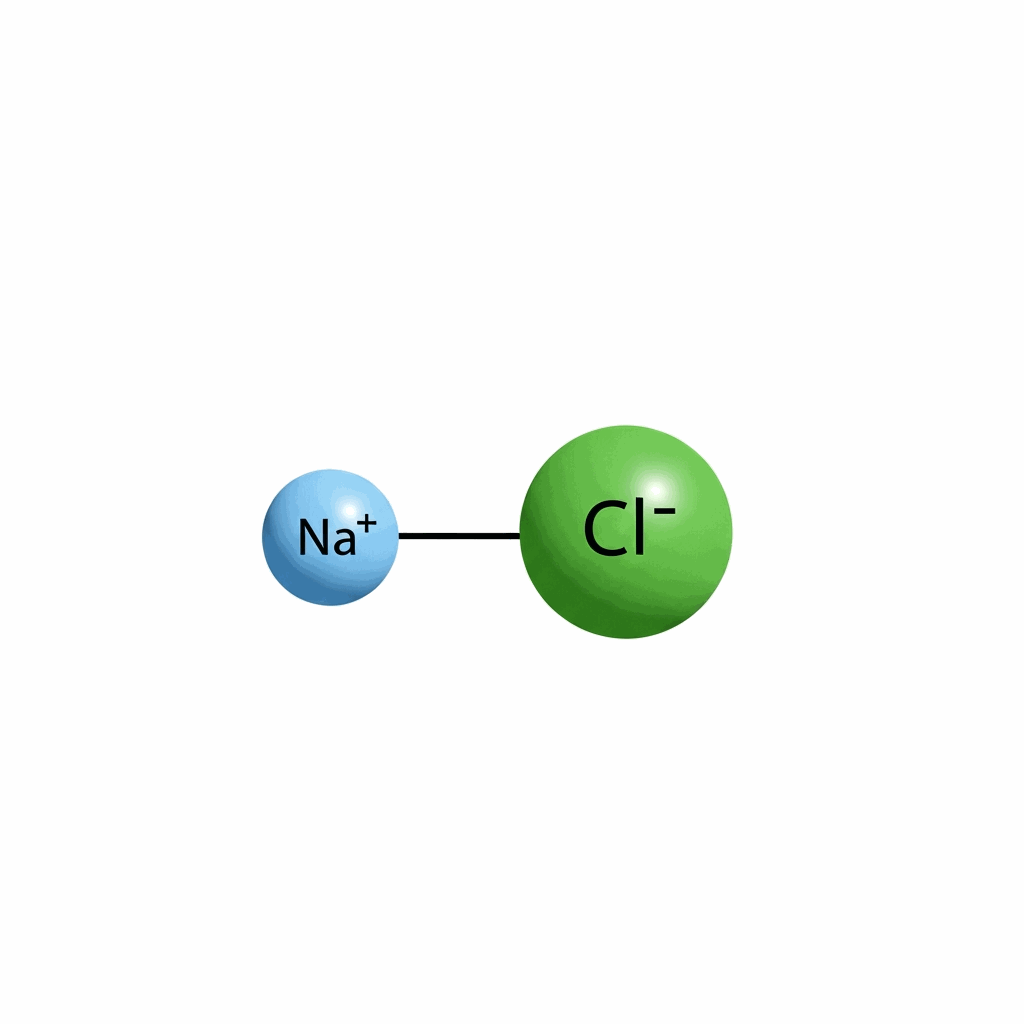
Sodium chloride, commonly recognized as table salt or halite, is an essential ionic compound with the chemical formula NaCl, representing a 1:1 stoichiometric ratio of sodium and chloride ions. This white crystalline solid is ubiquitous in nature, found in vast underground deposits and dissolved in high concentrations within seawater. As a fundamental electrolyte, it plays a critical role in biological processes, maintaining osmotic pressure and fluid balance in living organisms. In industrial sectors, sodium chloride serves as a primary raw material for the production of essential chemicals, including chlorine, sodium hydroxide, and sodium carbonate through processes like electrolysis. Its physical properties, such as high water solubility and thermal stability, make it indispensable across diverse fields ranging from food preservation to metallurgy. Historically, it has been a driver of global trade and economic development. Today, sodium chloride remains a cornerstone of modern chemistry, supporting infrastructure through de-icing and enhancing the industrial efficiency.

Attributes

Key Features and Benefits

  • Exceptional solubility in polar solvents facilitates versatile formulation.
  • Cost-effective availability makes it a preferred industrial feedstock globally.
  • Highly stable thermodynamic profile ensures reliability in extreme temperatures.
  • Natural preservative properties inhibit microbial growth in food applications.
  • Acts as an effective freezing point depressant for winter maintenance.
  • Non-toxic nature allows safe handling in pharmaceutical and medical contexts.
  • Critical component in saline solutions for essential patient hydration needs.
  • Enhances flavor profiles while acting as a vital nutrient for humans.
  • Facilitates ion exchange processes in water softening and treatment systems.
  • Robust chemical precursor for large-scale chlorine production.
  • Efficient agent for industrial brine refrigeration cooling cycles.
Specifications

Technical Highlights

  • Chemical formula: NaCl with a molar mass of 58.44 g/mol.
  • Crystal structure: Face-centered cubic FCC lattice arrangement.
  • Melting point: High thermal resistance at 801 degrees Celsius.
  • Boiling point: Evaporates at approximately 1413 degrees Celsius.
  • Refractive index: Approximately 1.5442 for precise optical applications.
  • Solubility: Reaches 360 grams per liter in water at standard temperature.
  • Density: Solid state density measures 2.16 grams per cubic centimeter.
  • pH level: Neutral aqueous solution maintaining a value near 7.0.
  • Dielectric constant: 5.9 at high frequencies for specific electronic uses.
  • Hygroscopicity: Low moisture absorption under typical atmospheric conditions.
  • Specific heat capacity allows for efficient thermal energy storage management.

Download Technical Data Sheet (TDS)

Practical industry uses

Applications

  • Food Industry: Essential for flavoring, curing, and long-term preservation.
  • Chemical Manufacturing: Feedstock for chlorine, caustic soda, and hydrogen.
  • Road Maintenance: De-icing agent to lower the freezing point of ice.
  • Healthcare: Preparation of intravenous saline solutions and nasal sprays.
  • Water Treatment: Regenerates ion-exchange resins in domestic water softeners.
  • Textiles: Used in dyeing and printing to fix color pigments.
  • Agriculture: Supplement for livestock nutrition and soil stabilization efforts.
  • Metal Processing: Flux in smelting and secondary aluminum production.
  • Oil Industry: Drilling fluid additive to increase density and stabilize shale.
  • Cosmetics: Texture modifier and thickening agent in shampoos.
  • Soap Production: Assists in the salting-out process.
Key Sectors

Target Industries

Discover more

Related products

Key Sectors

We’re Here to Support Your Chemical Sourcing Needs

Have a question or need a quote? Our team is here to help with product details, pricing, and global delivery options.

Send a message to us

Your email address will not be published. Required fields are marked *