Bio - Based / Green Solvents, High-Purity Solvents

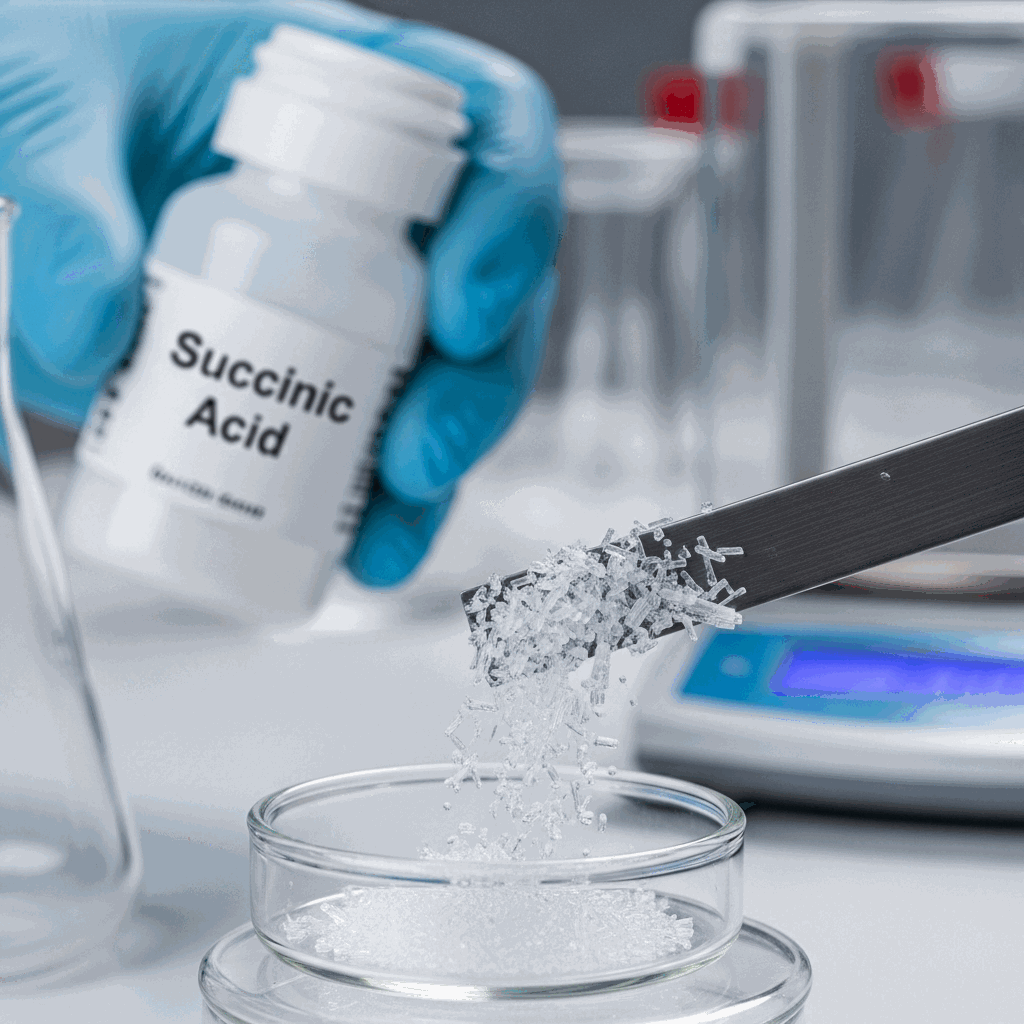
Succinic Acid

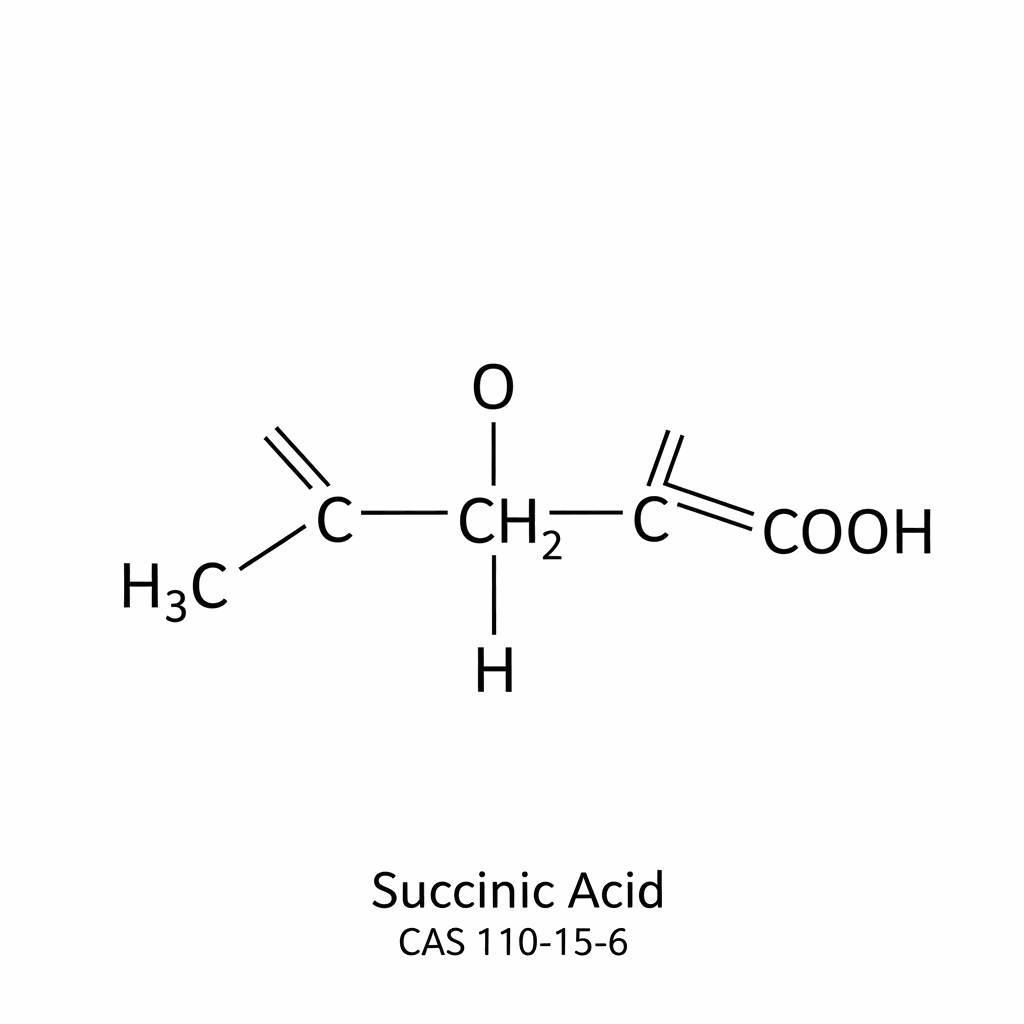
Succinic acid, systematically known as butanedioic acid, is a dicarboxylic acid with the chemical formula (CH2)2(CO2H)2. This naturally occurring organic compound is a white, odorless solid at room temperature and is widely distributed in nature, appearing in various plant and animal tissues. It serves as a vital intermediate in the citric acid cycle, facilitating cellular respiration and energy metabolism. Produced industrially via the hydrogenation of maleic acid or through specialized fermentation of glucose and biomass sources, succinic acid is gaining prominence as a key bio-based platform chemical. Its unique structure, featuring two carboxylic acid groups, allows it to participate in numerous chemical reactions, including esterification, dehydration, and amidation. Its high reactivity makes it an essential precursor for synthesized polymers, resins, and surfactants. Known for its biodegradability and low toxicity, succinic acid is increasingly favored in sustainable chemistry, serving as a versatile building block for diverse industrial, pharmaceutical, and food-grade applications.

Attributes

Key Features and Benefits

  • Excellent solubility in water and alcohol, making it easy to incorporate into aqueous formulations and various organic solvent systems.
  • High purity profile with minimal impurities, ensuring consistent performance in sensitive pharmaceutical synthesis and high-grade food production processes.
  • Strong acidity relative to other organic acids, providing effective pH regulation and buffering capabilities in cosmetic and industrial liquid formulations.
  • Remarkable chemical stability under standard storage conditions, exhibiting resistance to oxidative degradation and maintaining its crystalline structure over long periods.
  • Versatile reactivity due to its bifunctional nature, allowing for the creation of complex esters, polyamides, and cyclic anhydrides for advanced material science.
Specifications

Technical Highlights

  • Molecular weight is 118.09 g/mol with a melting point range typically between 185 to 188 degrees Celsius depending on purity levels.
  • Vapor pressure is approximately 0.000022 mmHg at 25 degrees Celsius, indicating very low volatility and high stability in solid-state handling.
  • Solubility in water is approximately 58 grams per liter at 20 degrees Celsius, increasing significantly as the temperature of the solvent rises.
  • Dissociation constants (pKa) are 4.21 and 5.64 at 25 degrees Celsius, characterizing it as a moderately strong diprotic organic carboxylic acid.
  • The compound exhibits a density of 1.56 g/cm3 and is characterized by a monoclinic crystalline structure under standard ambient conditions.

Download Technical Data Sheet (TDS)

Practical industry uses

Applications

  • Production of biodegradable plastics like polybutylene succinate (PBS), which offers a sustainable alternative to traditional petroleum-based polymers in packaging.
  • Used as a specialty acidity regulator and flavoring agent in the food industry, enhancing the sensory profile of beverages and processed snacks.
  • Key intermediate in the synthesis of pharmaceuticals, particularly in the manufacturing of active ingredients for antibiotics, sedatives, and anti-inflammatory medications.
  • Vital component in the formulation of high-performance resins, coatings, and surfactants used across the automotive, construction, and textile manufacturing sectors.
  • Acts as a precursor for the synthesis of succinimides, which are utilized as dispersants in lubricants and fuel additives for engines.
Key Sectors

Target Industries

Discover more

Related products

Key Sectors

We’re Here to Support Your Chemical Sourcing Needs

Have a question or need a quote? Our team is here to help with product details, pricing, and global delivery options.

Send a message to us

Your email address will not be published. Required fields are marked *