High-Purity Solvents, Water Treatments

Sulfuric Acid

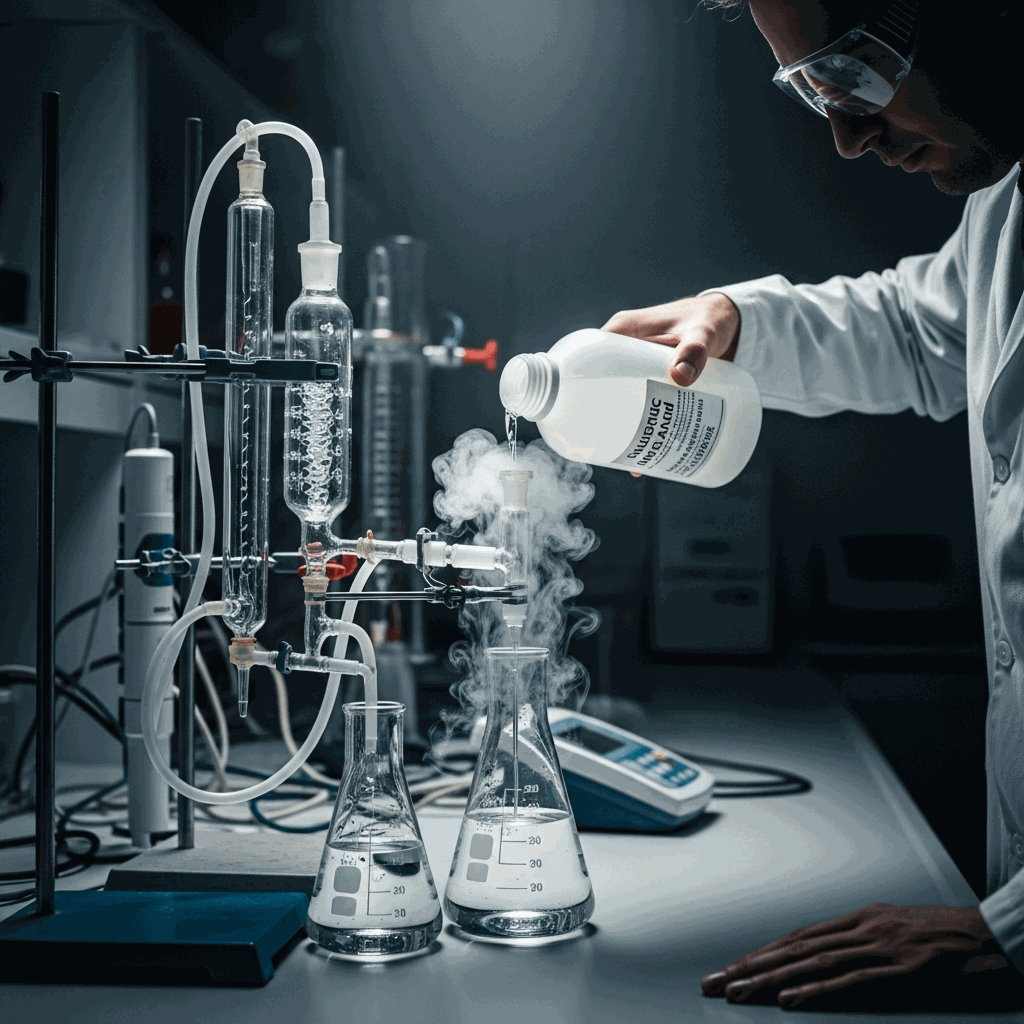
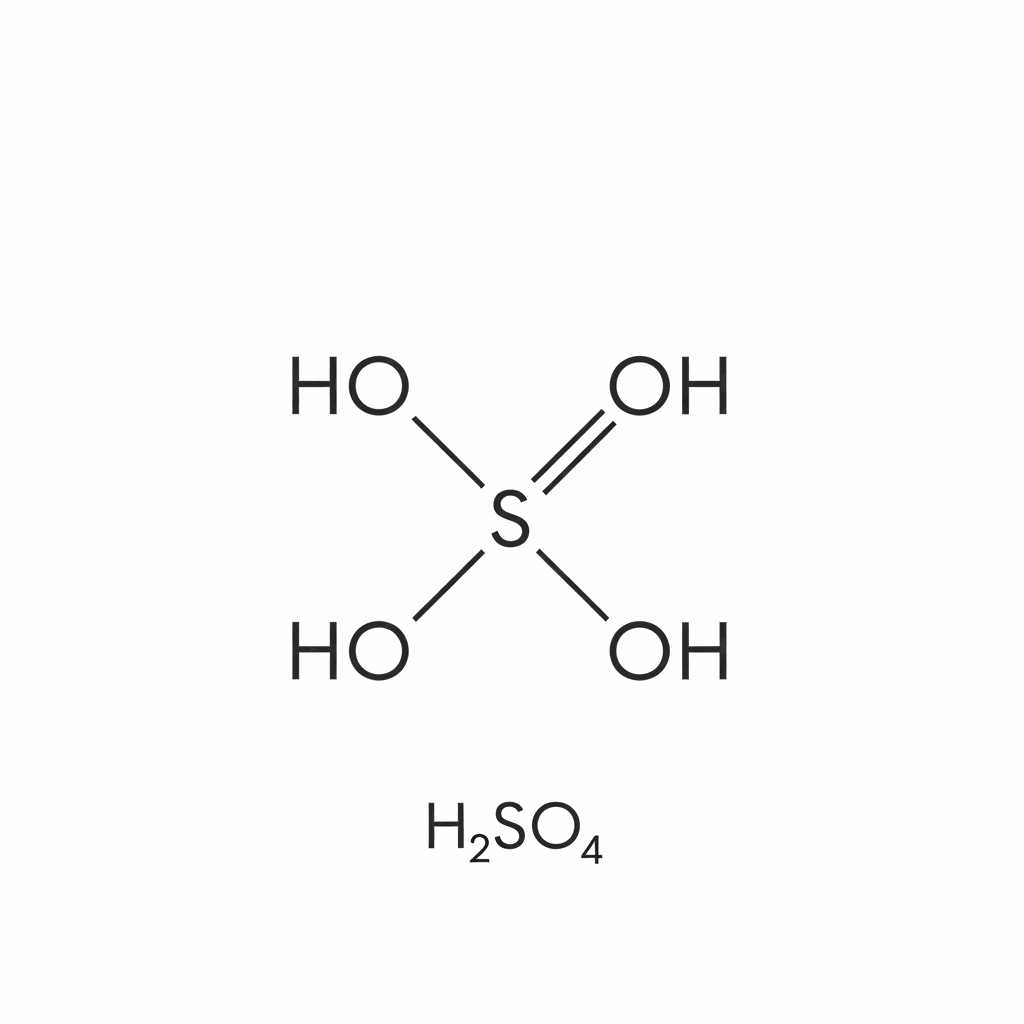
Sulfuric acid (H2SO4) is a highly corrosive, dense, oily liquid that is one of the most commercially important chemicals globally. Known historically as oil of vitriol, it is a strong mineral acid with powerful dehydrating and oxidizing properties. Its production volume often serves as an indicator of a nation’s industrial strength. The acid is colorless to slightly yellow, depending on purity, and is fully miscible with water in an extremely exothermic reaction. Primarily produced via the contact process involving the oxidation of sulfur dioxide, it serves as a fundamental building block in chemical synthesis. Its molecular structure consists of a central sulfur atom bonded to two hydroxyl groups and two oxygen atoms. Because of its high affinity for water, it is frequently used as a drying agent. Handling requires extreme caution due to its ability to cause severe chemical burns and permanent tissue damage upon contact, necessitating rigorous safety protocols.

Attributes

Key Features and Benefits

  • Strong diprotic acid providing high reactivity for chemical synthesis.
  • Exceptional dehydrating agent capable of removing water molecules from organic compounds.
  • High density and boiling point facilitate stable industrial processing at elevated temperatures.
  • Powerful oxidizing agent suitable for metallurgical and refining applications.
  • Cost-effective production makes it an economical choice for large-scale manufacturing.
  • Versatile concentration ranges available, from dilute to fuming oleum grades.
  • Critical reagent for pH control and neutralization in wastewater treatment.
  • Excellent electrolyte properties for lead-acid battery technology.
  • Catalytic efficiency in esterification and nitration reactions.
  • Readily available global supply chain.
Specifications

Technical Highlights

  • Molecular Weight: 98.079 g/mol.
  • Density: 1.84 g/cm3 for 98% solutions.
  • Boiling Point: 337 degrees Celsius.
  • Melting Point: 10 degrees Celsius.
  • Vapor Pressure: <0.001 mmHg at 20 degrees Celsius.
  • Viscosity: 26.7 cP at 20 degrees Celsius.
  • Pka: -3 for first dissociation.
  • Hydration: High heat of hydration requires acid to water mixing.
  • Compatibility: Requires PTFE, lead, or specialized stainless steel.
  • CAS Number: 7664-93-9.
  • UN Number: 1830.
  • Hazard Class: 8 Corrosive.
  • Solubility: Fully miscible in water with significant exothermic release.

Download Technical Data Sheet (TDS)

Practical industry uses

Applications

  • Fertilizer Production: Essential for manufacturing phosphoric acid, superphosphates, and ammonium sulfate.
  • Chemical Manufacturing: Key intermediate in producing hydrochloric acid, nitric acid, and synthetic detergents.
  • Petroleum Refining: Used as a catalyst for alkylation to improve fuel octane ratings.
  • Metal Processing: Critical for pickling processes to remove scale and rust from steel.
  • Lead-Acid Batteries: Functions as the electrolyte in automotive and industrial energy storage.
  • Textile Industry: Employed in the production of synthetic fibers.
  • Water Treatment: Used for pH adjustment and regeneration of ion-exchange resins.
  • Pigment Production: Vital in the sulfate process for titanium dioxide manufacturing.
Key Sectors

Target Industries

Discover more

Related products

Key Sectors

We’re Here to Support Your Chemical Sourcing Needs

Have a question or need a quote? Our team is here to help with product details, pricing, and global delivery options.

Send a message to us

Your email address will not be published. Required fields are marked *