High-Purity Solvents, Personal Care

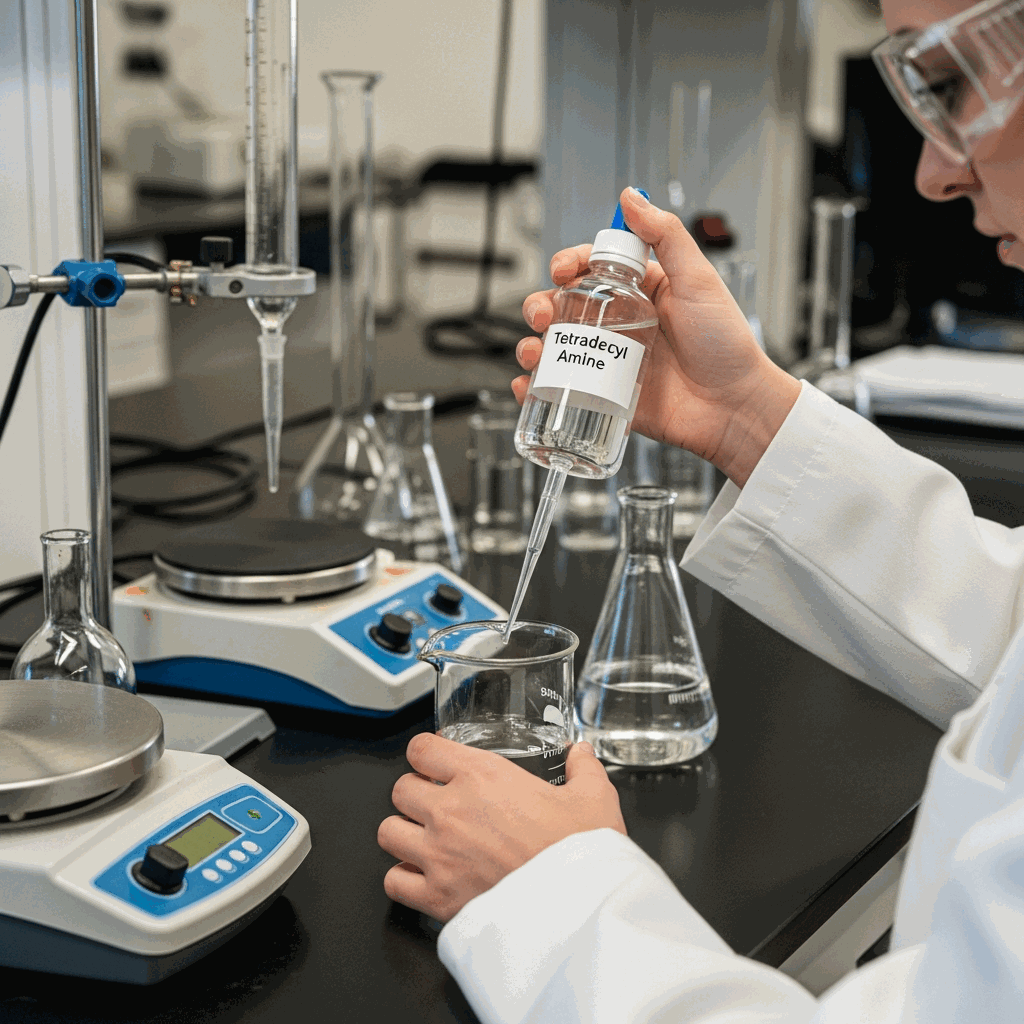
Tetradecyl Amine

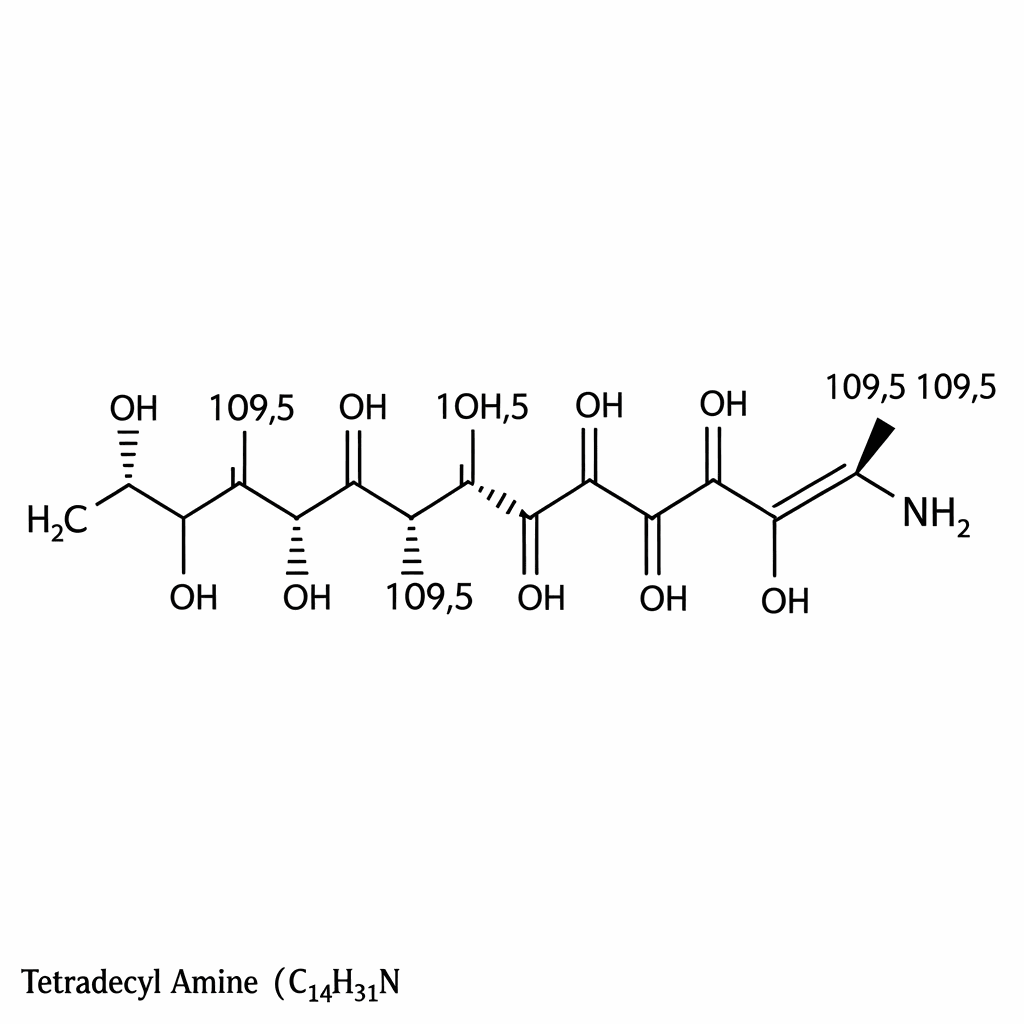
Tetradecyl Amine, also known as 1-Tetradecanamine or Myristylamine (CAS: 2016-42-4), is a primary aliphatic fatty amine characterized by a linear 14-carbon saturated hydrocarbon chain. This compound serves as a vital intermediate in oleochemistry, bridging the functional gap between shorter-chain dodecyl amines and longer-chain hexadecyl amines. Physically, it appears as a white, waxy solid at room temperature with a faint, characteristic ammoniacal odor.

Due to the presence of a reactive primary amino group attached to a long hydrophobic tail, Tetradecyl Amine exhibits significant surface-active properties. It is typically synthesized via the catalytic hydrogenation of tetradecanenitrile or through the reductive amination of myristic acid derivatives. Its chemical versatility allows it to undergo various reactions, including ethoxylation, quaternization, and neutralization. This makes it an essential building block for cationic surfactants, biocides, and corrosion inhibitors used across diverse industrial sectors, from mineral processing to personal care synthesis.

Attributes

Key Features and Benefits

  • Optimal Hydrophobic Balance: The C14 alkyl chain provides a specific lipophilic profile that is often superior to C12 or C16 chains for targeted surfactant HLB (Hydrophilic-Lipophilic Balance) requirements.
  • Strong Surface Substantivity: Possesses a high affinity for negatively charged substrates, allowing for the formation of protective films on metals, minerals, and fibers.
  • High Synthesis Yields: Acts as a high-purity precursor for the production of quaternary ammonium salts, amine oxides, and betaines.
  • Thermal Stability: Demonstrates excellent stability under high-temperature processing conditions compared to unsaturated fatty amines.
  • Low Volatility: Its high molecular weight ensures low vapor pressure, making it safer to handle in industrial heating processes.
Specifications

Technical Highlights

  • Molecular Formula: $C_{14}H_{31}N$
  • Molecular Weight: Approximately 213.40 g/mol.
  • Physical Properties: Melting point range of 37°C to 42°C; boiling point of approximately 291°C.
  • Amine Value: Typically measured between 255–265 mg KOH/g, indicating a high concentration of primary amine content.
  • Solubility: Insoluble in water; demonstrates high solubility in common organic solvents such as ethanol, chloroform, and diethyl ether.
  • Chemical Reactivity: Readily forms salts with organic and inorganic acids and reacts with alkyl halides or ethylene oxide to create specialized derivatives.
  • Safety Profile: Classified as corrosive and environmentally hazardous (aquatic toxicity), requiring stringent containment and PPE.

Download Technical Data Sheet (TDS)

Practical industry uses

Applications

  • Corrosion Inhibition: Widely used in the oil and gas industry to protect pipelines and refinery equipment from acidic corrosion by forming a monomolecular hydrophobic layer.
  • Mineral Flotation: Serves as an efficient cationic collector in the froth flotation process for the beneficiation of silicate, potash, and phosphate ores.
  • Chemical Intermediates: Primary feedstock for manufacturing Tetradecyl Dimethyl Benzyl Ammonium Chloride (a potent biocide) and Myristyl Amine Oxide.
  • Agrochemical Adjuvants: Utilized in pesticide formulations to improve the wetting, spreading, and penetration of active ingredients on waxy plant surfaces.
  • Fuel and Lubricant Additives: Incorporated into formulations to act as a dispersant and detergent, preventing sludge buildup in internal combustion engines.
Key Sectors

Target Industries

Discover more

Related products

Key Sectors

We’re Here to Support Your Chemical Sourcing Needs

Have a question or need a quote? Our team is here to help with product details, pricing, and global delivery options.

Send a message to us

Your email address will not be published. Required fields are marked *