High-Purity Solvents, Polyurethane (PU) and Resin

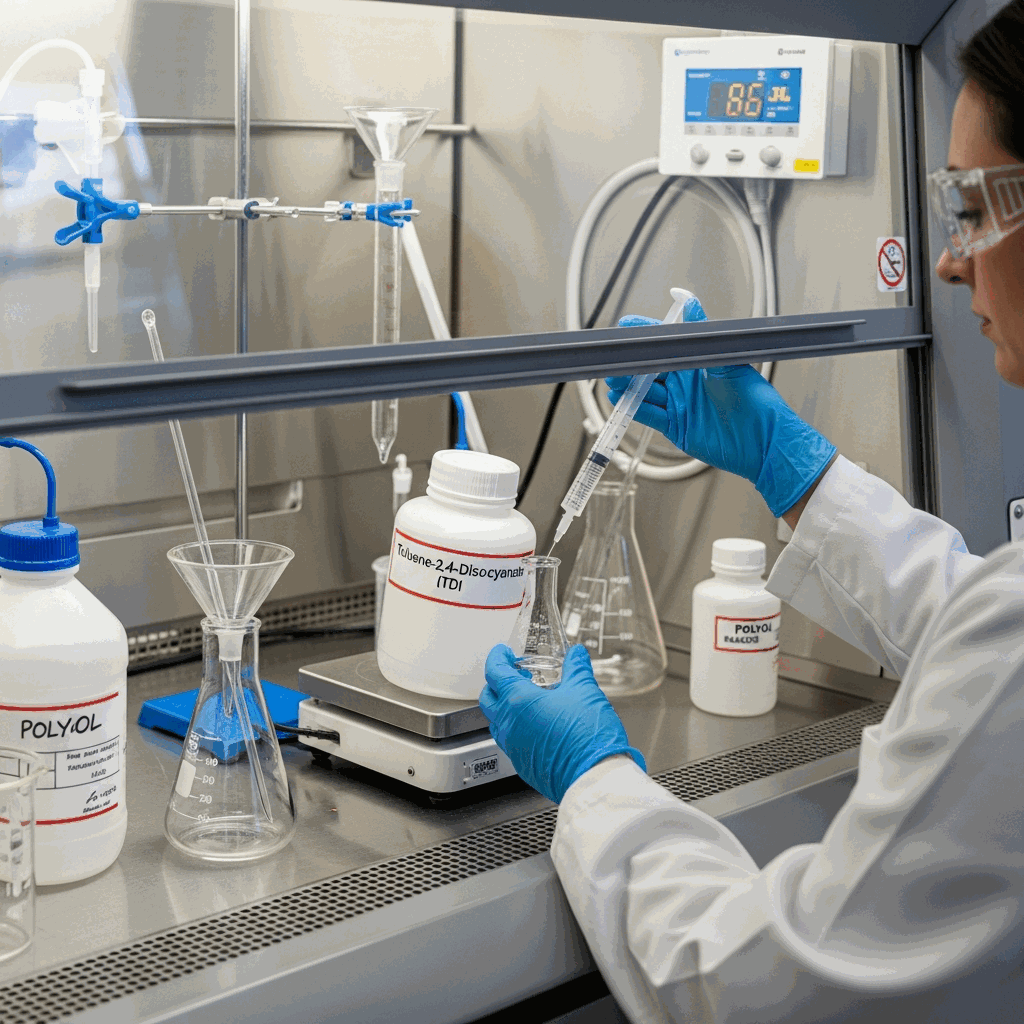
Toluene-2,4-Diisocyanate (TDI)

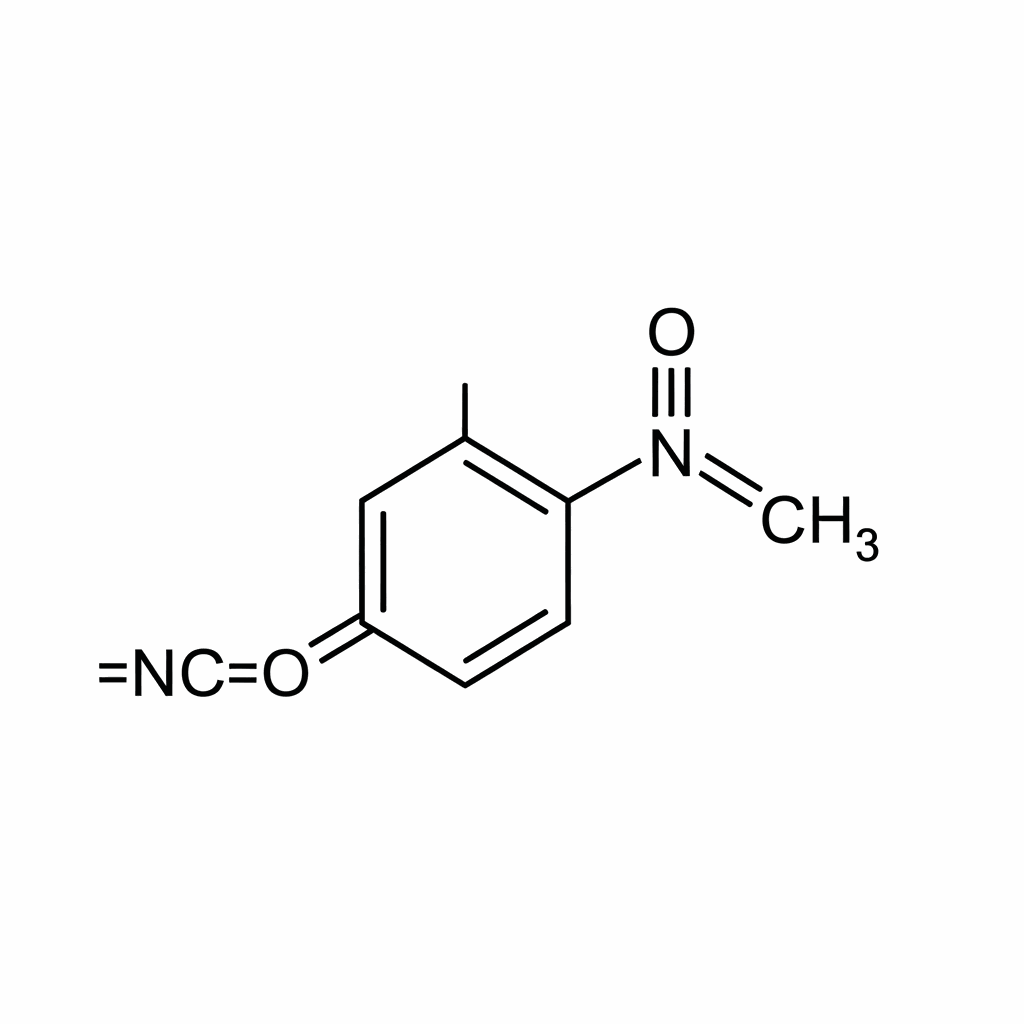
Toluene-2,4-Diisocyanate (TDI), identified by CAS number 584-84-9, is a high-production-volume aromatic isocyanate that serves as a fundamental building block in the global polyurethane industry. It is characterized by its molecular formula $C_9H_6N_2O_2$ and consists of a benzene ring with a methyl group and two isocyanate functional groups at the 2 and 4 positions. While 2,4-TDI can be produced in pure form, it is most commonly utilized in industrial applications as an isomeric blend with 2,6-TDI (typically in 80/20 or 65/35 ratios).

At ambient temperatures, TDI exists as a clear to pale-yellow liquid with a sharp, pungent odor. Its primary chemical utility lies in its high reactivity toward polyols, forming polyurethane polymers through exothermic addition reactions. Due to its significant vapor pressure and status as a potent respiratory sensitizer, TDI is handled under strict regulatory oversight, requiring advanced ventilation and rigorous personal protective equipment (PPE) protocols to ensure worker safety.

Attributes

Key Features and Benefits

  • Rapid Processing Speeds: High chemical reactivity allows for fast curing times, which is essential for continuous high-speed foaming production lines.
  • Exceptional Resilience: Facilitates the production of flexible foams with high load-bearing capacity and excellent recovery properties.
  • Versatile Isomer Ratios: Can be blended or used as a pure isomer to fine-tune the morphology and mechanical strength of the resulting polymer.
  • Cost-Effectiveness: Provides one of the most economical pathways for the large-scale manufacture of low-density cellular plastics.
  • High NCO Content: A theoretical NCO content of 48.3% ensures high cross-linking efficiency per unit weight of the monomer.
Specifications

Technical Highlights

  • Molecular Weight: 174.16 g/mol.
  • Physical Properties: Boiling point of 251°C and a specific gravity of approximately 1.22 at 25°C.
  • Flash Point: 127°C (Closed Cup), classifying it as a combustible liquid.
  • Vapor Pressure: Approximately 0.01 mmHg at 25°C; volatility necessitates stringent inhalation exposure controls.
  • Solubility: Miscible with common organic solvents including ether, acetone, and benzene.
  • Moisture Sensitivity: Highly reactive with water, producing carbon dioxide ($CO_2$) and insoluble ureas; requires storage under a dry nitrogen blanket.
  • Viscosity: Low viscosity (approx. 3 mPa·s at 25°C) ensures ease of pumping and mixing in industrial dispensers.

Download Technical Data Sheet (TDS)

Practical industry uses

Applications

  • Flexible Polyurethane Foam: The dominant application for manufacturing mattresses, pillows, and upholstered furniture padding.
  • Automotive Interiors: Used extensively for molded seat cushions, headrests, armrests, and vibration-dampening components.
  • Industrial Coatings: Acts as a precursor for high-performance polyurethane floor coatings, wood finishes, and anti-corrosive marine paints.
  • Adhesives and Sealants: Formulated into high-strength bonding agents for construction, aerospace, and footwear industries.
  • Elastomers: Utilized in the production of castable elastomers for industrial rollers, wheels, and gaskets requiring high abrasion resistance.
  • Textile Treatments: Applied in specialty coatings for waterproof fabrics and synthetic leathers.
Key Sectors

Target Industries

Discover more

Related products

Key Sectors

We’re Here to Support Your Chemical Sourcing Needs

Have a question or need a quote? Our team is here to help with product details, pricing, and global delivery options.

Send a message to us

Your email address will not be published. Required fields are marked *