Bio - Based / Green Solvents, High-Purity Solvents

Acetic Acid

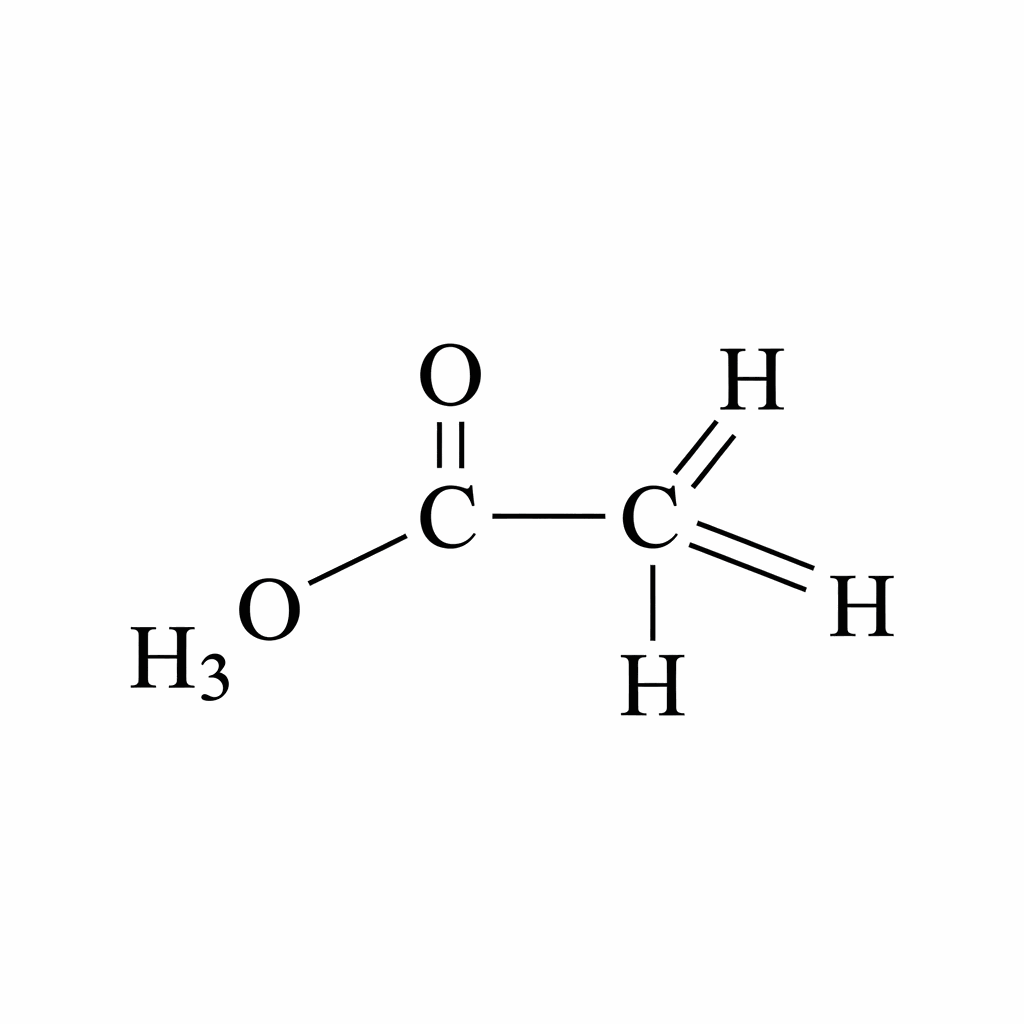
Acetic acid, systematically named ethanoic acid, is a colorless liquid organic compound with the chemical formula CH3COOH. When undiluted, it is often called glacial acetic acid. Acetic acid is the second simplest carboxylic acid, following formic acid. It is a vital industrial chemical and chemical reagent, primarily used in the production of cellulose acetate for photographic film, polyvinyl acetate for wood glue, and synthetic fibers and fabrics. In households, diluted acetic acid is frequently used in descaling agents. In the food industry, acetic acid is controlled by the food additive code E260 as an acidity regulator and as a condiment. As a weak acid, it only partially dissociates in aqueous solutions. The global demand for acetic acid is approximately 6.5 million metric tons per year, with much of that met through recycling; the remainder is manufactured from methanol. Acetic acid possesses a distinctive sour taste and pungent smell, identifying it.

Attributes

Key Features and Benefits

  • High Corrosivity: Concentrated acetic acid is corrosive to skin and metal, requiring specialized handling and stainless steel containers.
  • Miscibility: It is fully miscible with water and most organic solvents, making it a versatile solvent in chemical syntheses.
  • Pungent Odor: Characterized by a strong, sharp vinegar-like smell detectable at low concentrations, aiding in leak detection protocols.
  • Acidity Profile: Functions as a weak monoprotic acid in aqueous solutions, with a pKa of approximately 4.76 at room temperature.
  • Freezing Point: Pure glacial acetic acid solidifies at 16.6 degrees Celsius, forming ice-like crystals that give the material its name.
Specifications

Technical Highlights

  • Molecular Formula: CH3COOH with a molar mass of 60.052 g/mol, characterized by a carboxyl functional group and a methyl group.
  • Boiling Point: Standard boiling point of 118.1 degrees Celsius (244.6 degrees Fahrenheit) at 101.3 kPa atmospheric pressure for pure substance.
  • Vapor Pressure: Exhibits a vapor pressure of 1.5 kPa at 20 degrees Celsius, contributing to its volatility and pungent aromatic presence.
  • Refractive Index: Measured at 1.371, which is useful for purity verification and concentration analysis using standard refractometry in laboratory settings.
  • Density: Relative density of 1.049 g/cm3 at 25 degrees Celsius, making it slightly denser than water in its liquid state.

Download Technical Data Sheet (TDS)

Practical industry uses

Applications

  • Polymer Production: Critical precursor for Vinyl Acetate Monomer (VAM), which is the basis for paints, adhesives, and paper coatings.
  • Food Processing: Used extensively as an antimicrobial agent, pH regulator, and flavor enhancer in pickled products and commercial salad dressings.
  • Textile Dyeing: Acts as an essential acidifying agent in the dyeing process of wool and silk to ensure color fastness.
  • Pharmaceutical Synthesis: Utilized in the manufacture of aspirin and other acetylated drugs, serving as an acetylating agent in organic reactions.
  • Solvent Utility: Frequently employed as a solvent for recrystallization and in the production of terephthalic acid for PET plastic containers.
Key Sectors

Target Industries

Discover more

Related products

Key Sectors

We’re Here to Support Your Chemical Sourcing Needs

Have a question or need a quote? Our team is here to help with product details, pricing, and global delivery options.

Send a message to us

Your email address will not be published. Required fields are marked *