High-Purity Solvents, Polyurethane (PU) and Resin

Polymethylene Polyphenylene Isocyanate (Polymeric MDI)

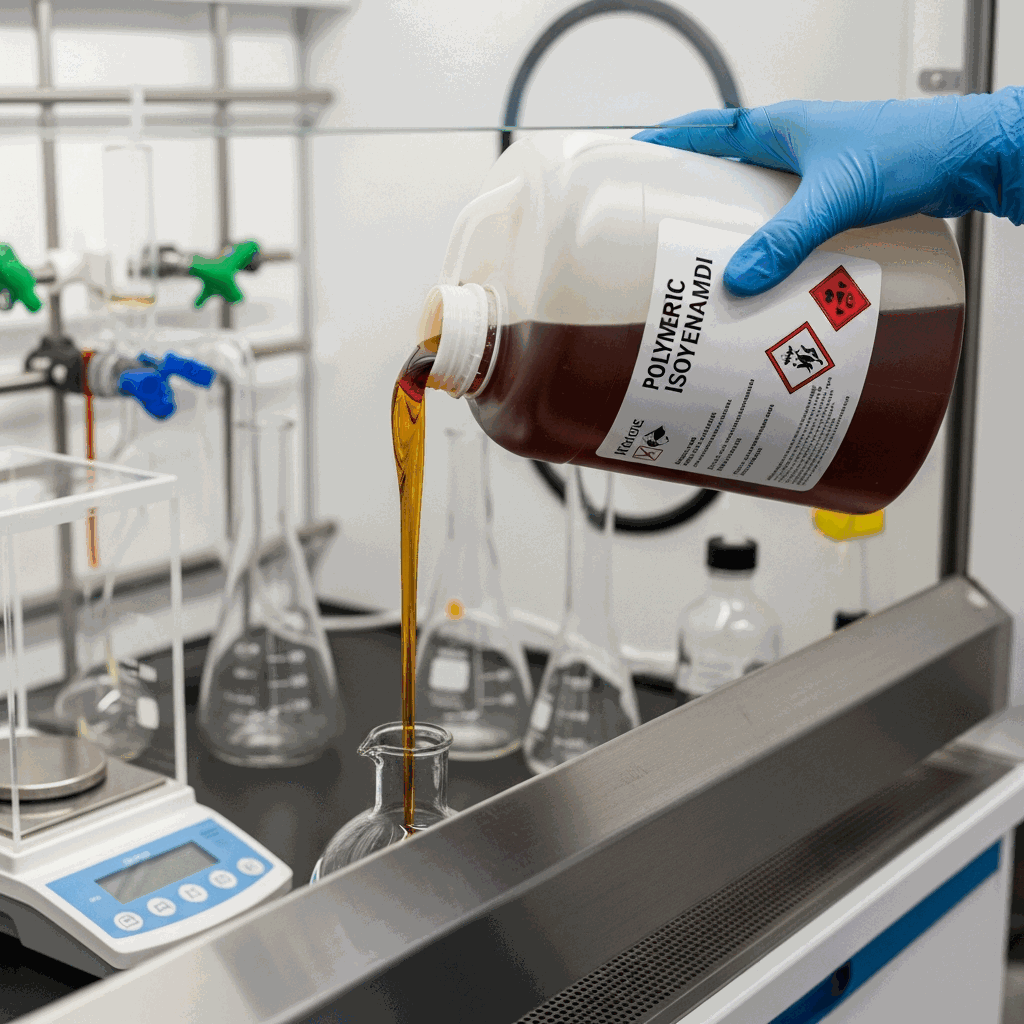
Polymethylene Polyphenylene Isocyanate (PMDI), identified by CAS No. 9016-87-9, is a foundational chemical intermediate in the polyurethane industry. Unlike pure MDI, which is crystalline at room temperature, PMDI is a complex mixture containing methylene diphenyl diisocyanate isomers and higher molecular weight oligomers. It typically appears as a dark brown, viscous liquid. PMDI is synthesized through the phosgenation of polyamines, which are produced via the acid-catalyzed condensation of aniline and formaldehyde.

The industrial significance of PMDI lies in its high reactivity with hydroxyl-functional polyols to form cross-linked polyurethane networks. Its relatively low vapor pressure compared to toluene diisocyanate (TDI) provides a safer handling profile in large-scale manufacturing. As a multi-functional isocyanate, it is the primary driver for the production of rigid foams, high-performance binders, and structural materials. It plays a critical role in global energy efficiency by serving as the core component in high-performance thermal insulation for the construction and refrigeration sectors.

Attributes

Key Features and Benefits

  • High Cross-Linking Density: The oligomeric nature provides higher functionality (typically 2.6–3.0), resulting in polymers with superior structural rigidity and thermal stability.
  • Low Volatility: Exhibits low vapor pressure at ambient temperatures, significantly reducing the risk of inhalation exposure compared to other aromatic isocyanates.
  • Fast Cure Rates: Offers rapid reaction kinetics, allowing for high-speed industrial processing and shorter demolding times in manufacturing cycles.
  • Excellent Adhesion: Provides robust bonding to various substrates, including metals, wood, and plastics, without the need for extensive primers.
  • Moisture Resistance: Once cured, it forms a hydrophobic matrix that provides excellent protection against environmental degradation.
Specifications

Technical Highlights

  • NCO Content: Typically ranges from 30.0% to 32.0%, which dictates the stoichiometry for polyol blending.
  • Viscosity Profile: Generally maintained between 150 and 700 mPa·s at 25°C, ensuring pumpability and ease of mixing in high-pressure impingement equipment.
  • Average Functionality: Measures between 2.6 and 3.0, influencing the final mechanical properties and stiffness of the polyurethane.
  • Specific Gravity: Approximately 1.23 at 25°C.
  • Acidity: Controlled at low levels (typically <0.05% as HCl) to ensure consistent reactivity and shelf-life stability.
  • Flash Point: High flash point (typically >200°C), enhancing fire safety during storage and transport.

Download Technical Data Sheet (TDS)

Practical industry uses

Applications

  • Rigid Insulation Foams: The primary component for manufacturing polyisocyanurate (PIR) and polyurethane (PUR) boards used in building envelopes and cold storage.
  • Refrigeration: Used in the “pour-in-place” insulation for domestic refrigerators and commercial freezers to achieve high thermal efficiency.
  • Wood Composite Binders: Acts as a formaldehyde-free adhesive for producing oriented strand board (OSB), particleboard, and medium-density fiberboard (MDF).
  • Automotive Components: Utilized in the production of semi-rigid foams for dash panels, headliners, and sound-absorption modules.
  • Foundry Resins: Serves as a high-strength binder in the cold-box and no-bake processes for precision metal casting molds.
Key Sectors

Target Industries

Discover more

Related products

Key Sectors

We’re Here to Support Your Chemical Sourcing Needs

Have a question or need a quote? Our team is here to help with product details, pricing, and global delivery options.

Send a message to us

Your email address will not be published. Required fields are marked *